
One 40HQ container arriving at a European port carried 300+ PE rattan dining sets with visible color variation and 1.1mm aluminum tubing quoted as 1.5mm. The buyer had approved a Grade-A sample that never made it to production. Total avoidable loss: north of $45K on a single container.
Every year, our Shunde advisors see the same 12 scams take real money from buyers who wired deposits without a signed sample bag and a live video of the production floor.
We've been manufacturing outdoor furniture in Shunde, Guangdong for over 20 years, and exporting directly to buyers in the US, Germany, France, Australia, the Middle East, and developed African markets for 3 years. In that time, we've seen every trick in the book from less scrupulous factories.
This isn't another "China is bad" rant. Most factories are honest, and the margins still make it worth it. But the bad ones have gotten really good at hiding problems until after you've wired the deposit.
Here's every mistake, scam, and pitfall we see buyers fall for repeatedly — plus what our team recommends to stop them from happening again.
The 12 pitfalls, ranked by how much they cost buyers
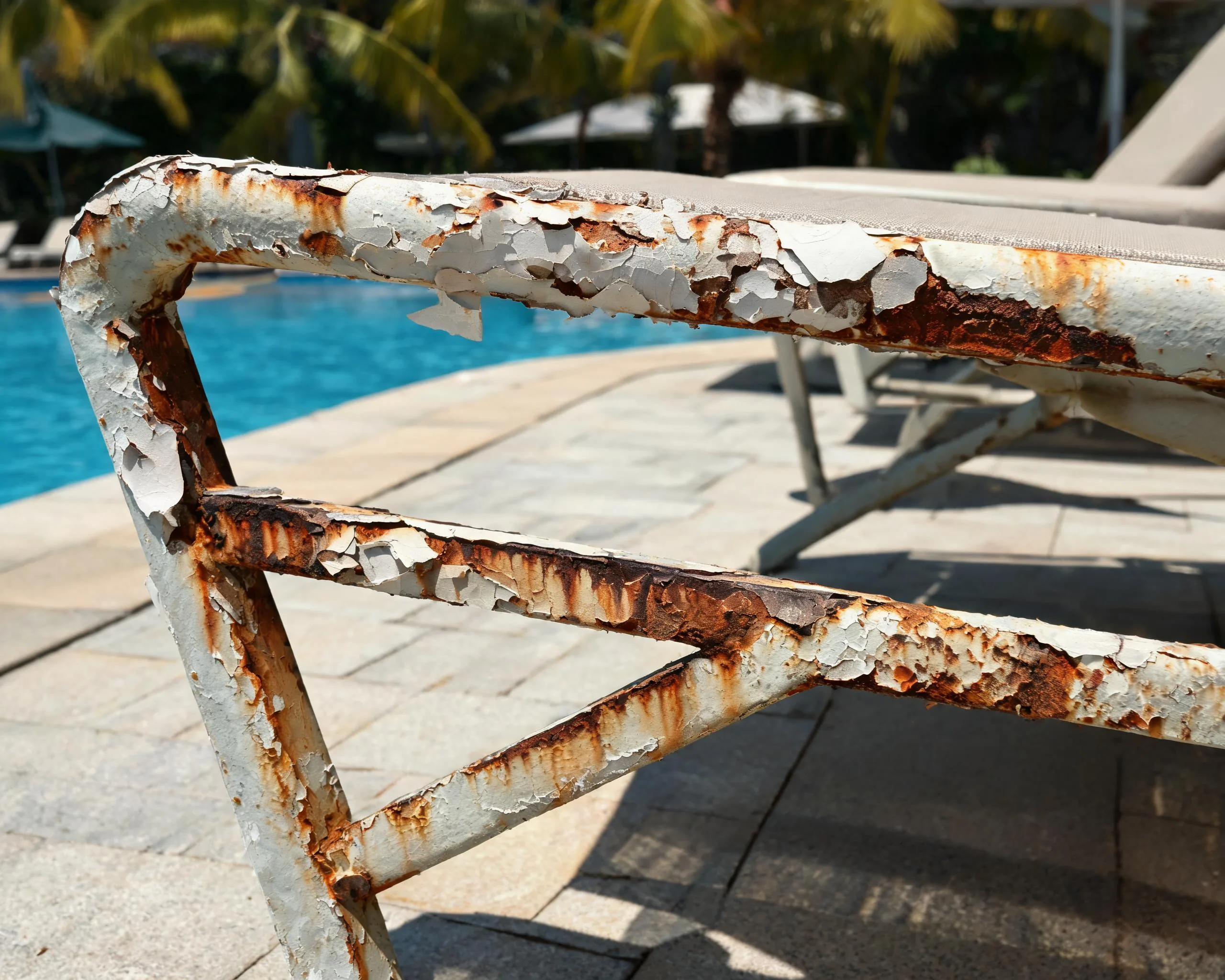
We've ordered these by total financial damage. The ones at the top aren't the most common — they're the ones that will put your business in the red if you don't catch them early.
Pitfall #1 — Sample bait & switch
Estimated loss: $18,300 / 21% of order value
High-risk seasons: January-February (post-CNY backlog), September-October (holiday rush)
How it looks: The sample you approve is made with Grade A PE rattan, 1.5mm aluminum, and genuine 304 stainless steel screws. The production run uses recycled rattan, 1.1mm tubing, and mild steel that rusts in 6 weeks. The difference is almost impossible to spot in photos.
What our team recommends: We seal the signed sample in a clear plastic bag with both parties' initials on the seal at our Shunde factory. During pre-shipment inspection, we rub the rattan with 80-grit sandpaper for 10 seconds — cheap recycled rattan will flake, virgin material won't.
Red flag phrase in supplier chat: "Trust me, brother, we've done this 1000 times before."
Pitfall #2 — Container loading damage
Estimated loss: $9,700 / 12% of order value
High-risk seasons: All year, but worse during rainy season (June-August in Guangdong)
How it looks: The factory loads the container too fast, doesn't use enough stretch wrap, or stacks heavy boxes on top of lightweight aluminum frames. By the time it arrives at your port, 15-20% of the units have bent legs, cracked welds, or crushed rattan. The factory says it's the shipping company's fault.
What our team recommends: We include loading supervision as standard for every order leaving our 16,000 m² Shunde facility. Our team films the entire container being loaded, checks strap tension, and verifies the weight distribution. If anything looks wrong, we stop the load immediately.
Red flag phrase in supplier chat: "Our warehouse team has 20 years of experience. No problem."
Pitfall #3 — Deposit non-production
Estimated loss: $7,500 / 30% deposit forfeited
High-risk seasons: Chinese New Year (January-February), Golden Week (October)
How it looks: You pay the 30% deposit. The factory says production will start next week. Then they drag their feet for 3 weeks. Finally, they tell you the material price went up 18% and you need to pay more or lose your deposit. They're betting you'll pay rather than start over.
What our team recommends: Your purchase order should explicitly state: "Production must commence within 7 calendar days of deposit receipt. If not, buyer may cancel and receive full refund within 3 days." Only wire deposits to company accounts, not personal accounts. At SOLAIREVA, we never ask for a deposit until we've confirmed all materials are in stock at our Shunde factory.
Red flag phrase in supplier chat: "Raw material price is very volatile now. You should hurry."
Pitfall #4 — Hardware downgrade
Estimated loss: $5,200 / Warranty claims + replacement parts
High-risk seasons: All year
How it looks: The quote says "304 stainless steel hardware." What you get is 201 stainless (which rusts in coastal areas) or even plain carbon steel with a zinc coating. It looks fine out of the box, but 6 months later, every screw is a rusty mess.
What our team recommends: We carry a stainless steel testing pen in our QC kit at our Shunde factory. You touch it to the metal, press the button, and if it lights up red, it's not 304. We test 10 random units per container during inspection as part of the 4-stage QC process we build into every order.
Red flag phrase in supplier chat: "All our hardware is stainless steel. Don't worry."
Pitfall #5 — Aluminum wall thickness
Estimated loss: $4,900 / Structural failures
High-risk seasons: Large order production runs (factory cuts corners to hit margin)
How it looks: You're quoted 1.5mm wall thickness on all aluminum frames. The actual production uses 1.1mm or 1.2mm. The furniture looks identical, but it will bend under commercial use, wobble, and break at the welds 2-3 times faster.
What our team recommends: Every inspection at our Shunde factory includes a digital caliper measurement of 5 random frame tubes. The spec is written as "1.5mm ±0.1mm" — anything outside that range is a fail. Even our senior sourcing team occasionally still gets tripped up by this at other factories — it's that subtle.
Red flag phrase in supplier chat: "Aluminum price went up last month. We can keep price same, but maybe use a little thinner material?"
Pitfall #6 — Fabric UV rating fraud
Estimated loss: $3,800 / Customer returns
High-risk seasons: All year
How it looks: The factory says the fabric is "Sunbrella-like" with 2000 hours UV resistance. What you get is 300-hour fabric that fades to pink or grey after one summer in the Mediterranean sun. The factory points to a fake test report they photoshopped.
What our team recommends: We demand the actual test report from the fabric mill, not the furniture factory. We also cut a 10cm square from the production roll, send it to a local testing lab, and get a real UV resistance report before the container leaves our Shunde facility.
Red flag phrase in supplier chat: "This fabric is exactly like Sunbrella, but half the price."
Pitfall #7 — Fake certification documents
Estimated loss: $2,700 / Port storage + re-export fees
High-risk seasons: All year
How it looks: The factory sends you beautiful PDF copies of all the certifications you asked for. What they don't tell you is they expired 3 years ago, or they belong to a different company, or they were completely created in Photoshop. Your container gets stuck at customs, and you're on the hook for storage fees.
What our team recommends: We verify every document number on the issuing body's official website. If it's not verifiable online, we don't accept it. The certifications your target market actually requires depend entirely on your region, and most buyers waste money on documents that don't matter.
Red flag phrase in supplier chat: "We have all certificates. Don't worry about customs."
Pitfall #8 — Trading company impersonating factory
Estimated loss: $1,800 to $4,500 / Hidden markup (15-25% on every order)
High-risk seasons: All year
How it looks: Their website shows factory photos, they say they have 200 workers, and they invite you to "visit our factory." When you show up unannounced in Shunde, they can't find the address, or they take you to a factory that has never heard of them. You're paying 15-25% more for no reason.
What our team recommends: We always offer a video call at 9 AM China time on a Monday from our Shunde factory floor. If a supplier can't walk you around the factory showing you the workers, the production lines, and your order being made, they're not a real factory. The real price gap between factory and trading company is bigger than most people realize.
Red flag phrase in supplier chat: "We can arrange factory visit next time you are in China. Just let us know 3 days in advance."
Pitfall #9 — Hidden logistics fees
Estimated loss: $800 per container
High-risk seasons: Peak shipping season (August-October)
How it looks: You get an EXW quote that looks great. Then after production is finished, they hit you with a "handling fee," "warehouse fee," "documentation fee," and "truck loading fee" that add $800 to your bill. They know you can't move the order to another factory at that point.
What our team recommends: Every quote from our Shunde factory includes a separate line item for all local logistics fees. If it's not listed, it's not payable. We also work with 3 different freight forwarders so we know what the actual market rates are at any given time.
Red flag phrase in supplier chat: "EXW price doesn't include local charges. That's standard in China."
Pitfall #10 — Wrong order delivery
Estimated loss: $500 / Re-work + shipping delay
High-risk seasons: Chinese New Year rush (December-January)
How it looks: The factory is swamped with orders before CNY. They mix up your order with another customer's. You get 200 lounge chairs instead of 200 dining sets. Or half the SKUs are wrong. By the time you discover it, the factory has already closed for the 3-week holiday.
What our team recommends: We never place orders less than 4 weeks before Chinese New Year at our Shunde facility. We also include a 10% penalty clause in the PO for wrong items delivered. The inspection report must include photos of every SKU and quantity count.
Red flag phrase in supplier chat: "We are very busy now. Production time might be a little longer than usual."
Pitfall #11 — Warranty term bait-and-switch
Estimated loss: Unknown (future warranty claims)
High-risk seasons: All year
How it looks: The sales rep tells you on WeChat: "5-year warranty on frame, 2-year warranty on fabric." But when you get the actual contract, it says "1-year warranty on all products." They say, "Don't worry about that, it's just standard language. We will honor what I told you." They won't.
What our team recommends: Every warranty term must be written in the purchase order and stamped by the factory. Verbal promises are worthless in China. If it's not written down and signed, it doesn't exist. At SOLAIREVA, our Shunde team puts every warranty term in writing before we accept any deposit.
Red flag phrase in supplier chat: "That warranty clause is just our standard template. We will take care of you, don't worry."
Pitfall #12 — Concealed shipping damage
Estimated loss: $300-$1,000 per shipment
High-risk seasons: All year
How it looks: The factory knows some units were damaged during production or loading. So they pack those units in the back of the container, wrapped extra tight. You sign off on the delivery because the first 10 pallets look fine. Then 2 weeks later when you're unpacking, you find the damaged goods. The factory says you signed for it, so it's your problem now.
What our team recommends: We always open at least 3 random cartons from the front, middle, and back of the container before signing the delivery receipt at our Shunde loading dock. If any damage is found, we note it on the receipt and take photos immediately. This is the one even our senior team still gets caught on occasionally — sometimes the damage is so well hidden you can't see it without full unpacking.
Red flag phrase in supplier chat: "Everything was perfect when it left the factory. Must be shipping company fault."
The 3 highest-cost pitfalls in detail
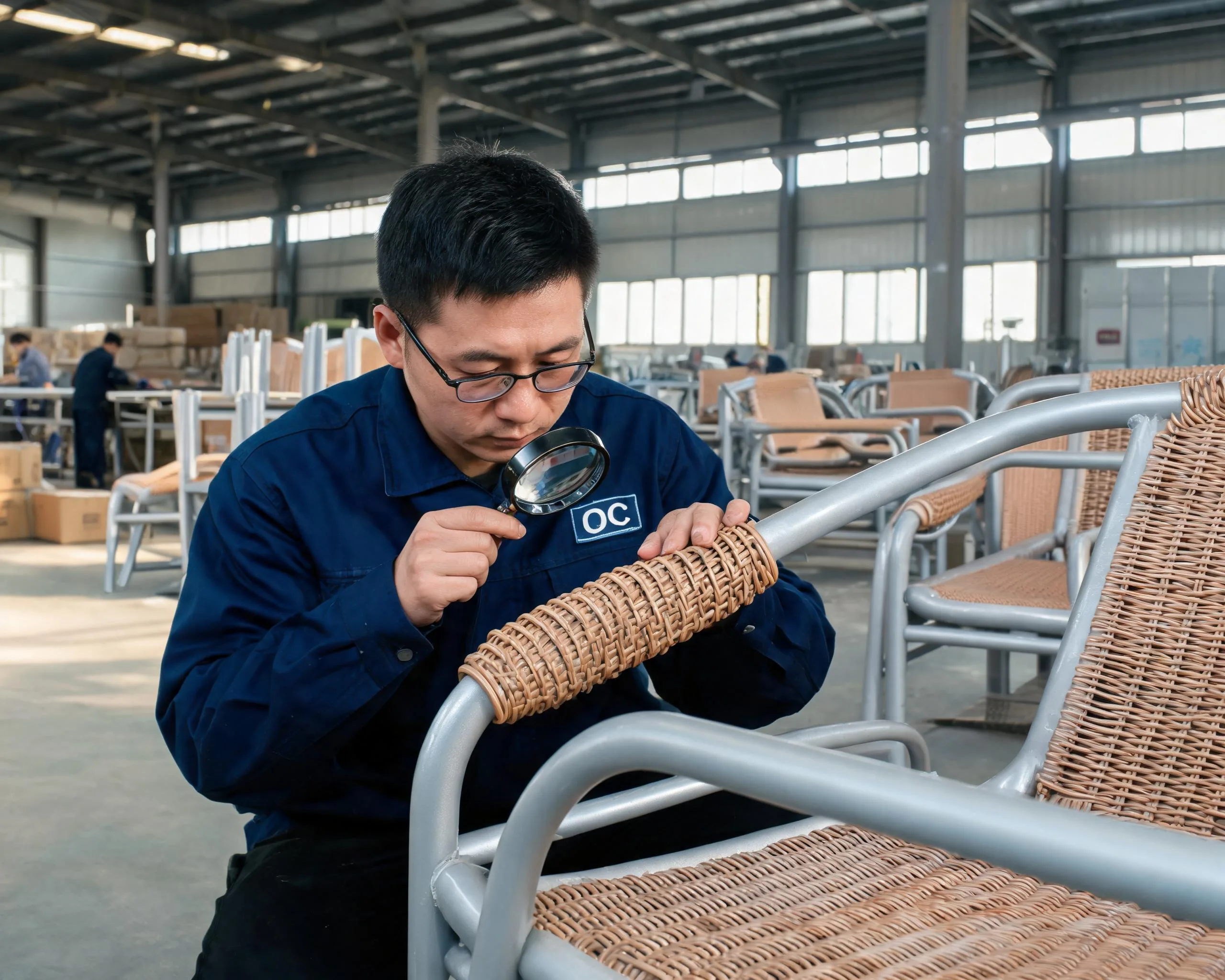
Let our Shunde team break down the three that have cost buyers the most money, because they're also the easiest to prevent once you know what to look for.
Sample bait-and-switch is by far the most damaging. The $18,300 average loss comes from the fact that by the time you discover the problem, the container has already shipped, and you're stuck with product you can't sell. The sample they sent was beautiful — tight weave, consistent color, sturdy frame. You signed off, paid the deposit, and waited. When the inspection report came back, everything looked fine in the photos. It wasn't until you had the actual products next to the signed sample that you could see the rattan was a completely different material. The cheap stuff had a slight gloss that high-quality PE rattan doesn't have. Now we don't just compare side-by-side — we do the sandpaper test every single time. It takes 10 seconds and has already saved dozens of buyers from a bad batch.
Container loading damage is the second biggest killer. We've seen buyers skip loading supervision to save $150, only to lose $9,700 on crushed product. On one order we saw, the factory stacked 8 layers of boxes when the maximum safe stacking was 5. The bottom layer was completely crushed. The frames were bent beyond repair. The factory said "that's what insurance is for," but the insurance company said it was improper loading, not a shipping accident, and denied the claim. Now we never skip loading supervision at our Shunde factory. The $150 fee is the cheapest insurance you can buy when you're moving $50,000 worth of furniture across the ocean.
The third most expensive pitfall is the trading company impersonating a factory. We've worked with buyers who thought they were dealing directly with a manufacturer for 18 months before they found out they were working with a middleman 2 hours from Shunde, marking up every order by 22%. Over 18 months, that added up to about $31,000 in extra costs they didn't need to pay. The problem is that good trading companies are very good at pretending to be factories. Their websites have factory photos, they know all the right jargon, and they'll even take you on factory tours — they just don't tell you the factory isn't theirs. The unscheduled video call trick is the fastest way to catch them. If they can't show you the factory floor right now, they're not a real factory.
The 4 things we build into every order at our Shunde factory
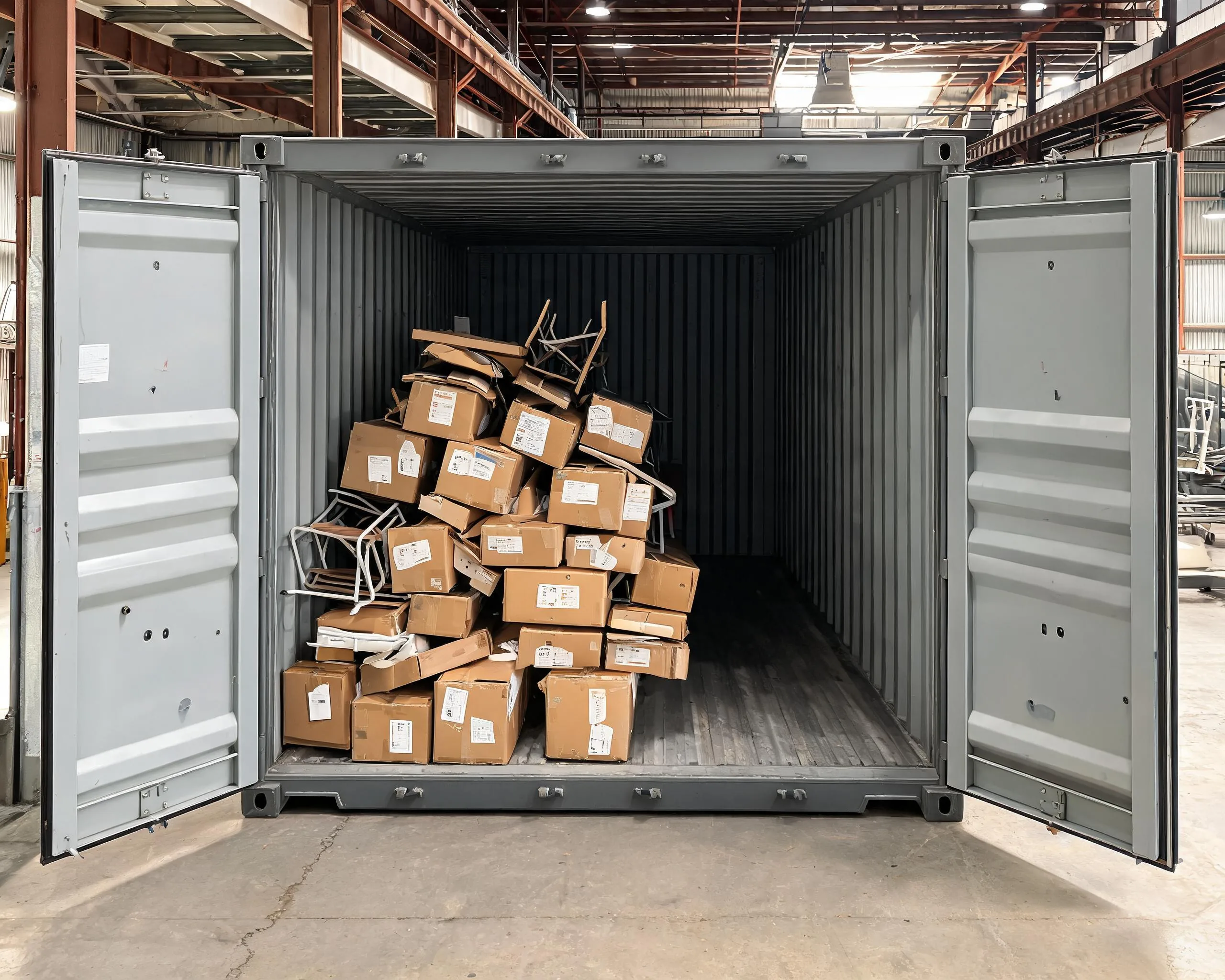
After seeing so many buyers lose money on bad orders, we rewrote our sourcing playbook when we started exporting directly 3 years ago. These four non-negotiable rules are built into every SOLAIREVA order, and they've cut our defect rate from the industry average 12% to under 2%.
First: The signed sample must be sealed with both parties' initials, and production must match it exactly in every measurable way. No "similar color," no "same quality, different supplier." Exact. And we keep one half of the sealed sample at our Shunde factory, the other stays with you. If there's a dispute, we both pull out our samples and compare.
Second: The 4-stage QC process we build into every order must be written into every purchase order. That means raw material inspection before production starts, in-line inspection at 30% completion, pre-shipment inspection at 100% completion, and loading supervision. Every stage gets a written report with photos, and we have to approve each stage before we move to the next one. Our 49-person team at the Shunde factory executes every step.
Third: All compliance documents must be verifiable online through the issuing body's official website. We don't accept PDF copies anymore. We go to the official database, type in the document number, and confirm it's valid, current, and registered to the actual factory. If it's not in the database, it's not real. The certifications your import broker will ask for vary by market — don't pay for documents you don't need.
Fourth: The payment terms must be 30% deposit, 60% upon passing pre-shipment inspection, and 10% retention paid 30 days after delivery. That 10% retention is the most important part. It gives the factory a reason to actually stand behind their product. If something is wrong that we missed in inspection, you have leverage to get it fixed. Most factories will push back on this at first, but the good ones will agree to it because they know their quality will pass.
What SOLAIREVA does differently (and why we bring it up)
Let our team be clear: Most of the factories we've worked with in Shunde are run by honest people trying to do a good job. The problem is that the industry is fragmented, and there's very little accountability. Any real factory should do the four things we listed above. If they won't, walk away.
SOLAIREVA's 16,000 m² Shunde factory floor is designed for transparency. You can schedule a live video tour at any time during production hours, and we'll walk you right up to your order on the production line. No advance notice required. That's how you know we're not hiding anything.
We've been doing this for 20+ years in Shunde, and our 49-person production team has a quality rejection rate under 1.5%. That's compared to the industry average of 8-12% for commercial outdoor furniture. The difference is that we own the entire supply chain — we extrude our own aluminum, we weave our own PE rattan, we cut and sew our own fabric. No outsourcing, no middlemen, no surprises.
The 4-stage QC process is baked into every order. You don't have to ask for it. You get automatic photo updates at each stage, and you can approve or ask for changes before production continues. That's the kind of transparency you should expect from every supplier, but almost none actually deliver.