What a commercial daybed has to do
A commercial daybed differs from a retail one in measurable ways. It carries two adults at once, so the platform should be rated for a 200 kg static load against the 100-120 kg used on a single sun lounger. It stays outdoors all year on a deck that sees chlorinated splash, salt air and direct sun, which sets the minimum standard for every coating and fixing. Staff clean it with a hose and a brush rather than by hand, which punishes loose weave, thin cushions and exposed screws. A canopy adds a fourth requirement, because a shade top turns a two-metre daybed into a sail.
| Requirement | Commercial daybed | Retail daybed |
|---|---|---|
| Load rating | 200 kg static, two adults | 100-120 kg, one user |
| Exposure | Year-round outdoors, chlorine and salt air | Sheltered terrace, seasonal use |
| Cleaning | Weekly hose-down by staff | Occasional owner care |
| Fixings | Stainless 304, 316 within 5 km of the sea | Zinc-plated screws |
| Consumables held on site | Spare canopy tops, covers, hardware kit | None |
Our daybed range includes the SV-F0289 lounge daybed in 180 cm and 200 cm widths, built on the same aluminum platform as the poolside loungers described in the commercial pool sun lounger guide, and the materials page lists the alloys, weaves and finishes we hold for poolside projects.
Canopy types: fixed frame, retractable arm, or separate umbrella
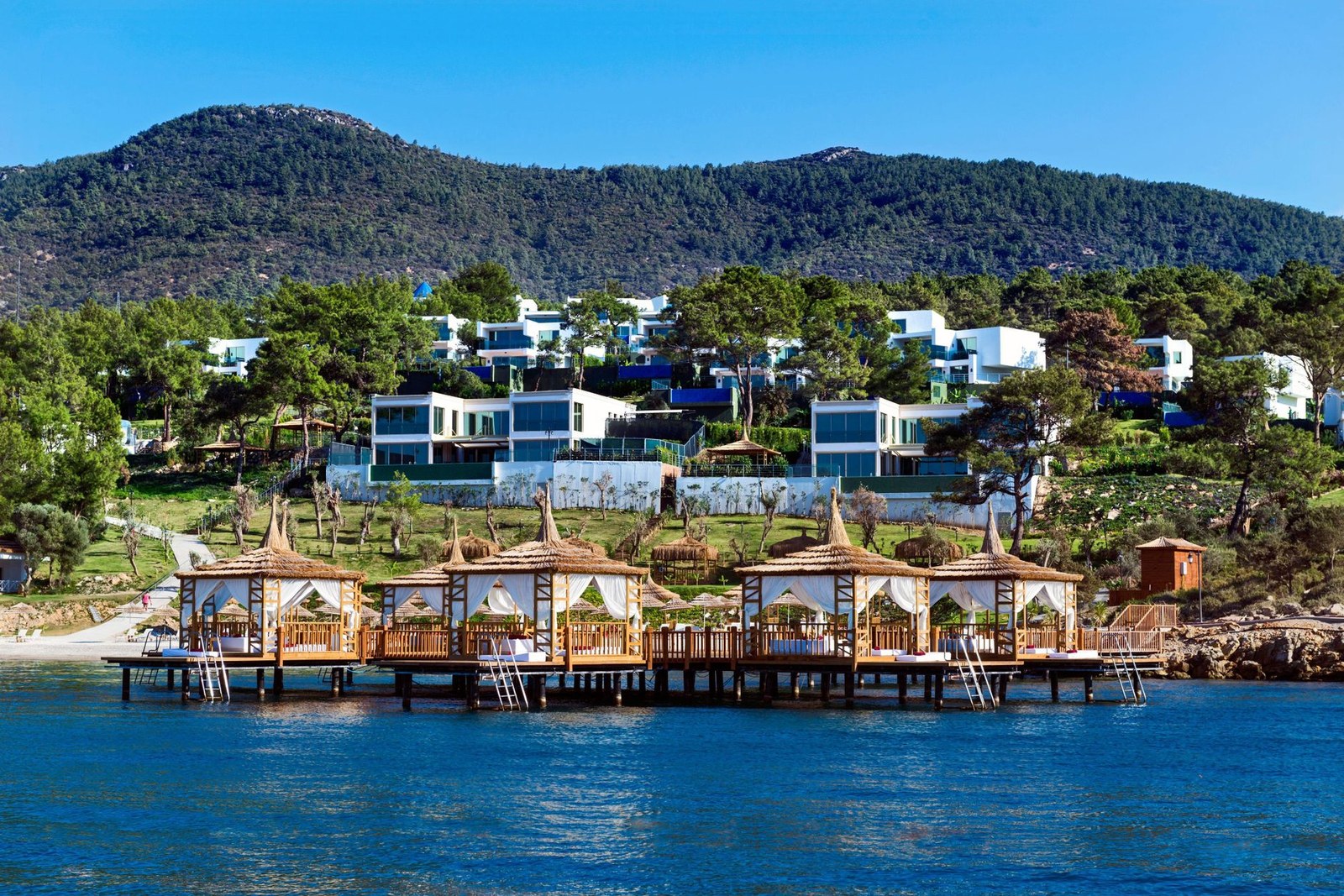
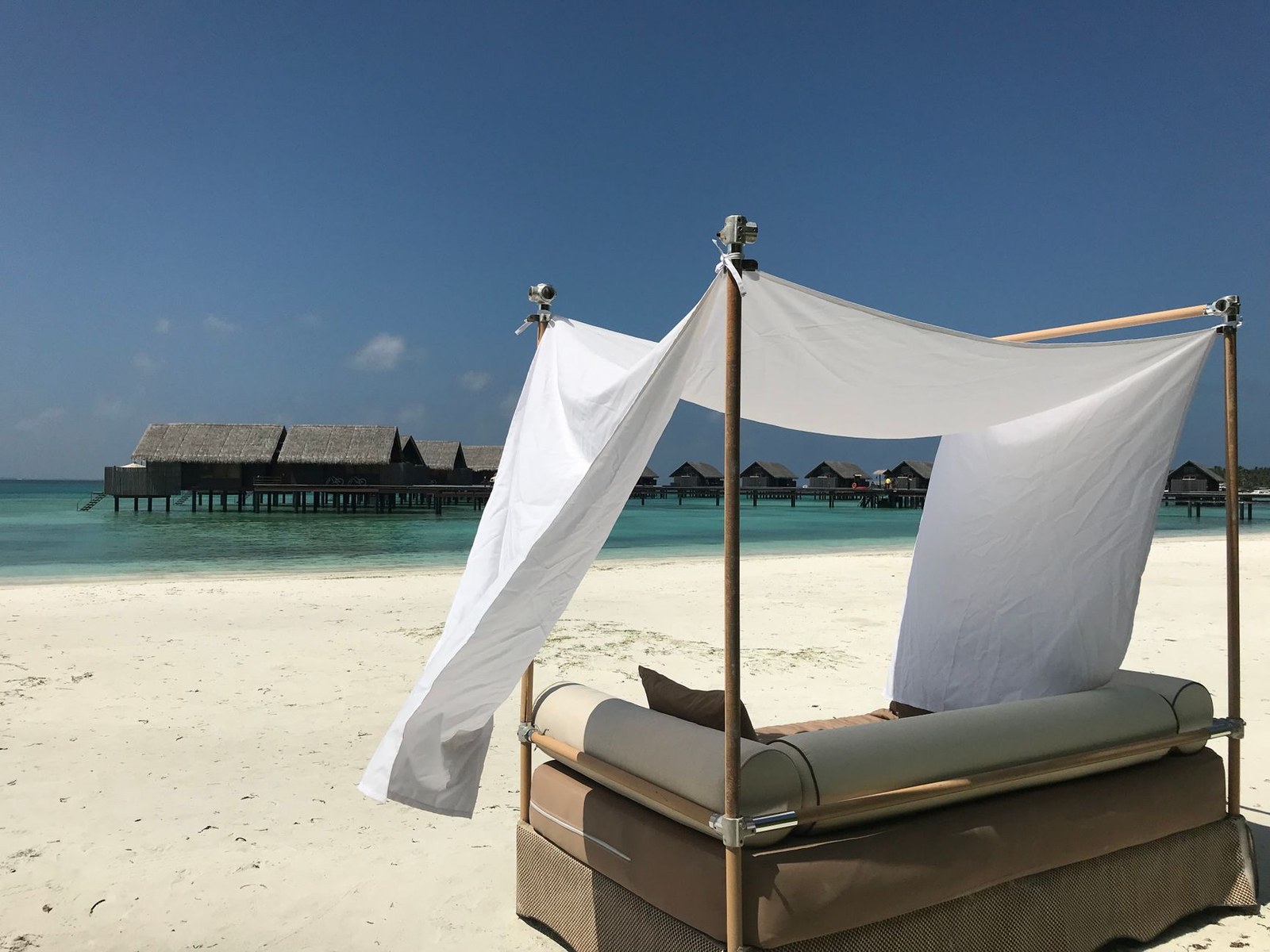
Three canopy options cover most hotel projects, and wind exposure decides between them more often than styling does. A fixed welded frame with a tensioned fabric top is the cheapest to build, the most rigid in a gust and the easiest to repair, which is why beach clubs and resorts above 40 daybeds usually specify it. A retractable arm lets a guest choose sun or shade and costs 15 to 25% more, the same 15 to 25% hinge uplift we quote on adjustable loungers, with the arm mechanism as the first failure point. A separate cantilever or centre-pole umbrella keeps the daybed frame simple, occupies deck space and is bought as its own line item.
| Canopy type | Shade control | First item to fail | Relative cost | Best fit |
|---|---|---|---|---|
| Fixed frame with tensioned top | Fixed, one direction | Fabric and corner pockets | Baseline | Beach clubs, large pool decks, exposed sites |
| Retractable arm | Guest adjustable | Arm hinge and gas strut | +15 to 25% | Boutique hotels, cabana rows |
| Separate umbrella | Guest adjustable, movable | Umbrella hub and ribs | Priced separately | Small decks, mixed seating plans |
Canopy direction deserves a sun path check before quantities are confirmed, because a fixed top that faces the wrong way shades the walkway and leaves the seat in full sun for the hottest hours. Deck zoning, aisle widths and daybed counts belong in the same drawing; the resort pool layout guide sets out the numbers we use for poolside planning.
Frame, weave and fixings for a chlorinated deck
Pool decks attack a daybed four ways at once: chlorine splash at pH 7.2 to 7.8, salt spray within 5 km of the coast, sunscreen oils, and UV that stays high for most of the day. Powder-coated aluminum 6063-T5 with an outdoor polyester coating of 60 microns or more is the default frame material, and it should pass 500 hours of neutral salt spray testing to ASTM B117 before you accept a quotation. Stainless steel 316 is the upgrade for beachfront decks: it costs 60 to 80% more than aluminum and extends frame life to 8 to 12 years, while 304 pits within three to five years in salt air.
| Frame and weave | Life on a pool deck | Weight | Relative cost | Where it fits |
|---|---|---|---|---|
| Powder-coated aluminum 6063-T5, 60+ microns | 7-10 years | 8-12 kg per single lounger | Index 45-65 | Default for hotels and pool clubs |
| Stainless steel 316 | 8-12 years | 12-18 kg | 60-80% above aluminum | Coastal and beachfront sites |
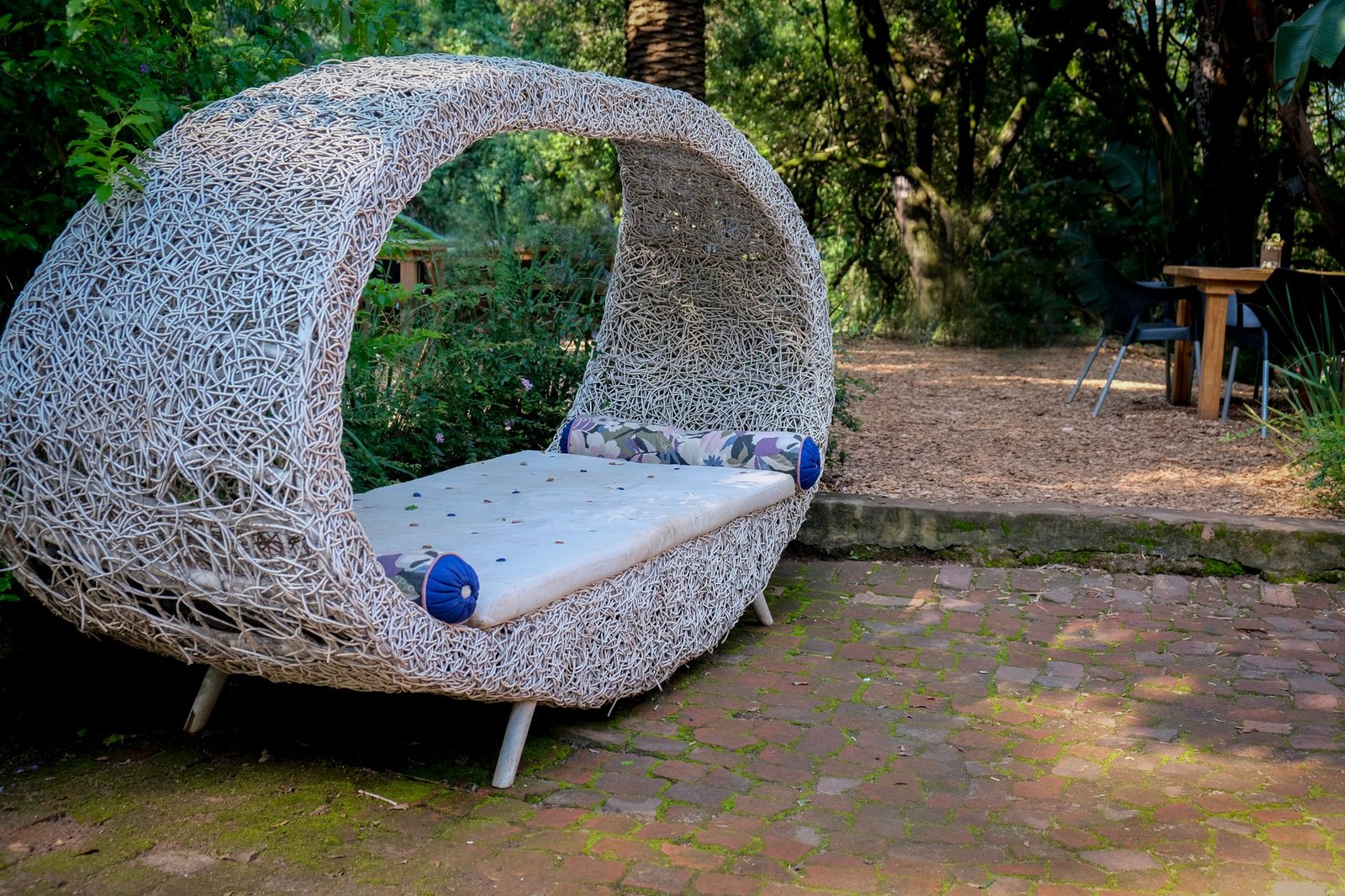
| PE rattan weave over aluminum | 4-6 years on a chlorinated deck, 8-15 years on a shaded terrace | 10-14 kg | Index 60-85 | Lounge look, re-weaveable frame |
| Steel frame without galvanizing | Rust within 6-12 months | Heaviest | Lowest | Avoid outdoors |
Fixings matter as much as the frame. Specify stainless 304 as standard and 316 within 5 km of the sea, covering bolts, washers, staples and the screws that hold the weave, because one zinc-plated screw bleeds a rust stain down a white cushion. Structural tube walls should be 1.5 mm or thicker on a contract daybed, and the frame should be inspected at the factory with the weave already tensioned. Ask also for the coating line: indoor epoxy powder chalks and flakes inside 12 to 18 months of poolside UV, so the polyester resin grade belongs in the quotation.
Canopy fabric and cushion fill: the two wear items
The frame outlives everything else on a daybed, and the canopy fabric is the first item to be replaced, usually in year 3 to 5, with the cushions following in the same window. Fabric weight and dye method set that clock: solution-dyed acrylic at 280 to 300 g/m2 holds lightfastness grade 8 of 8 on the ISO 105-B02 scale and carries a five-year colour guarantee, while piece-dyed polyester at 180 to 220 g/m2 fades visibly inside two seasons. Foam structure decides how the daybed feels after rain, which is the complaint guests actually report.
| Fabric or foam | Specification | Service life | Where it fits |
|---|---|---|---|
| Solution-dyed acrylic | 280-300 g/m2, lightfastness 8/8, UPF 50 | 5-year colour guarantee, 5-8 years of use | Beachfront, roof decks, high UV |
| Solution-dyed olefin | 240 g/m2, 650D-1000D yarn | 3-5 years | Mid-range resorts, seasonal decks |
| Piece-dyed polyester | 180-220 g/m2 | Visible fading in 12-24 months | Short-life projects only |
| Reticulated quick-dry foam | 30-35 kg/m3, 20-30 cells per 25 mm, mesh lining | 3-5 years in heavy use | Pool decks, beach clubs |
| Standard upholstery foam | 25-30 kg/m3, closed cell | 1-2 years | Retail and indoor use |
Manufacturer drainage tests show why the foam spec matters: reticulated foam holds about 40% of poured water after 60 seconds against roughly 80% for standard foam, and is practically dry after three hours while standard foam still holds most of it. Specify mesh drainage panels in the cushion base, covers that unzip for laundering, and a lining between foam and cover. Cushion replacement every three to five years is a real budget line in commercial use, so order covers in the project fabric and keep one spare set per 25 units.
Wind, ballast and anchoring on an open deck
Wind is the failure mode that catches hotels out, because a canopy roughly doubles the area a gust can push against. A 200 cm daybed weighs 45 to 80 kg depending on frame and canopy configuration, and on an exposed deck that weight alone is not enough. Quote anchor plates or ballast weights into the order, check that the canopy frame uses reinforced corner pockets and tear-resistant fabric, and write one rule into the housekeeping brief: canopy tops come off or fold down when gusts above 60 km/h are forecast. Pier decks and roof terraces need concealed anchor points most, especially where wind funnels between buildings.
Retractable arms and separate umbrellas bring their own wind rules. A cantilever umbrella needs a base heavy enough for its span, usually 30 to 50 kg of plates plus a ground fixing in exposed positions. Daybeds set against a wall or planter are far easier to protect than freestanding ones and often need nothing beyond a removable top. Ask a supplier what canopy wind rating they test to, and get the answer written into the quotation; where a site is windy for part of the year, a removable canopy top is the lower-risk specification.
MOQ, samples and lead time for daybed orders
Daybeds follow normal contract furniture bands: 20 to 50 units per SKU in aluminum, and 30 to 80 units where a new weave or mould is involved. A 12-unit cabana order therefore sits below MOQ, which in practice means a higher unit price, a small-order surcharge, or the daybeds sharing a container with loungers and tables. Samples run 15 to 20 working days for an existing design and 25 to 35 working days for new tooling, and bulk production takes 45 to 55 days after sample approval. A complete RFQ returns a written quote in two business days.
| Item | Typical figure | Planning note |
|---|---|---|
| MOQ, aluminum daybed | 20-50 units per SKU | Lower for catalog designs |
| MOQ, custom weave or new mould | 30-80 units per SKU | Tooling drives the higher band |
| Sample, existing design | 15-20 working days | Plus 3-7 days express shipping |
| Sample, new custom design | 25-35 working days | Incomplete specs add 1-2 weeks |
| Production lead time | 45-55 days | Container quantities, after sample approval |
| Quote turnaround | 2 business days | With a complete RFQ package |
Two planning notes save re-quotes on daybed orders. Send the canopy type, fabric weight and foam density with the enquiry, because those three lines move the price further than any other choice on the product. Then separate sample quantities from bulk quantities, since a sample built with production tooling can usually be credited against the order while a hand-built prototype cannot. The RFQ package guide lists the full document set, and the MOQ negotiation guide covers what is realistic to ask for on a 12 to 30 unit order.
Container and freight planning for bulky daybeds
Daybeds change the freight maths, because they are the bulkiest item in a poolside order. A 40HQ holds 65 to 68 CBM of usable volume, and a 200 cm daybed with canopy packs into two or more cartons, one of them long. Ask for carton dimensions and CBM per SKU, then divide 65 by that figure: on daybeds the answer is usually tens of pieces per container rather than the hundreds you see on flat-packed loungers. Freight per unit deserves its own line in the landed cost, and mixing daybeds with loungers, dining sets and umbrellas is the quickest way to bring the average down.
Canopy frames often ship in a separate carton from the platform and cushions, which affects both volume and loading pattern, since long cartons travel along the container length and stack two high at most. Ask for the carton list before booking freight, because a 205 cm platform carton cannot sit diagonally in a 40HQ and is charged as wasted volume when it is packed badly. The container capacity calculator shows usable volume per container type, and the shipping cost guide covers the 2026 freight bands by lane.
How to specify a canopy daybed in five steps
Five decisions set the price and the failure risk on a daybed order, and they work best in this order because each one changes the cost of the next. Skipping ahead to fabric weight or price brings the order back to the deck plan, and each re-quote round costs about 7 days of the programme plus 2 to 3 rounds of clarification. The sequence below follows the order our project team asks for the same information, from the 180 or 200 cm platform footprint through to the spares that travel in the container at 3 to 5% of the order quantity.
- Fix the footprint and the count. Confirm the platform size (180 or 200 cm wide), the deck aisle width and the number of daybeds per zone, then use the sun path to set canopy orientation.
- Choose the canopy type. Fixed frame on exposed decks, retractable arm where guests control shade, separate umbrella where the deck is small, and add 15 to 25% to the unit price for a retractable arm.
- Lock the frame specification. Name the alloy (6063-T5), the coating thickness (60 microns or more), the fastener grade (304, or 316 within 5 km of the sea) and the salt spray test (500 hours to ASTM B117).
- Specify fabric and cushion build. Solution-dyed acrylic at 280 to 300 g/m2 with a five-year colour guarantee, reticulated quick-dry foam at 30 to 35 kg/m3, mesh drainage lining and removable covers.
- Add anchoring, packing and spares. Anchor plates or ballast, carton CBM per SKU, 3 to 5% spare canopy tops and covers, and a hardware kit shipped in the same container.
Written down in that order, the specification gives a factory everything it needs to quote the same product twice without guessing, which is also what makes two supplier quotations comparable. The OEM/ODM page shows how a custom daybed drawing moves from this specification into sampling and production.
Maintenance and spare parts for a daybed zone
A daybed zone needs four maintenance actions across the year: a monthly wash with pH-neutral soap, a quarterly check of bolts, glides and canopy corner pockets, canopy fabric replacement every three to five years, and cushion replacement in the same window. Staff time is modest at roughly one worker day per 20 daybeds for a full wash cycle, but consumables are where budgets get missed. Spares on site matter more than most operators expect, because fabric fails long before the frame and a cabana row with three torn tops looks tired in photographs even when every frame is sound.
Order 3 to 5% spare canopy tops and cushion covers with the container, plus one hardware kit per 25 units covering bolts, glides and touch-up paint. Wash fabric with pH-neutral soap and a soft brush, keep any pressure washer below 100 bar, and let the canopy dry fully before folding so mildew does not form in the seams. The teak care guide runs on the same monthly and quarterly rhythm for timber items on the same terrace, so both can share one maintenance sheet.
Frequently asked questions about canopy daybeds
These five answers cover what buyers ask most often about the outdoor wicker daybed with canopy: how the unit is used on a hotel deck, whether it can stay outside all year, the MOQ and lead time in practice, how many fit in a 40HQ container, and how PE rattan compares with an all-aluminum build. Each answer stands on its own with the numbers attached, so it can be pasted into a project brief or a supplier comparison sheet. The short version: a 180 to 200 cm platform, an aluminum 6063-T5 frame, a 280 to 300 g/m2 solution-dyed acrylic canopy, and quick-dry foam on a mesh drainage base.
How is a canopy daybed used in a hotel or resort?
It is the two-person lounger on a pool deck, beach club or spa terrace, where guests book the space for a morning or a full day. A 180 to 200 cm wide platform takes two adults, and the canopy gives shade without a separate umbrella base standing in the walkway. Resorts place them in cabana rows along the pool edge with a side table between units, and boutique hotels use one or two on roof terraces. Ask for a 200 kg static load rating, and specify a frame built for chlorinated water even when the daybed sits a few metres back from the pool.
Can a canopy daybed stay outdoors all year?
Yes, when it is specified for constant outdoor exposure: aluminum 6063-T5 with a 60 micron powder coating, stainless 304 fixings, 316 within 5 km of salt water, quick-dry reticulated foam with mesh drainage, and a solution-dyed acrylic canopy at 280 to 300 g/m2. In regions with named storm seasons, choose a removable canopy top so the fabric can be stored while the frame stays on the deck. A retail-grade daybed with a piece-dyed polyester canopy and standard closed-cell foam will fade and mildew inside the first year of that treatment.
What MOQ and lead time should I expect for daybeds from China?
Aluminum daybeds normally start at 20 to 50 units per SKU, and custom weave or new moulds at 30 to 80 units per SKU. A sample of an existing design takes 15 to 20 working days, a new custom design 25 to 35 working days, and production runs 45 to 55 days after sample approval. A complete RFQ with quantities, finish and destination returns a written quote in two business days. Orders below MOQ are usually quoted at a higher unit price rather than refused.
How many daybeds fit in a 40HQ container?
A 40HQ gives 65 to 68 CBM of usable volume, and a 200 cm daybed with canopy packs into two or more cartons, so ask for the carton CBM per SKU and divide 65 by that number. Expect tens of units rather than the hundreds you see on flat-packed loungers, which is why daybed freight per unit runs higher. Mixing daybeds with loungers, dining sets and umbrellas fills the container better and spreads the freight over more pieces.
Is PE rattan or aluminum better for a poolside daybed?
PE rattan weave over an aluminum frame gives the lounge look most resort briefs ask for, and the weave is typically a 4 to 6 year item on a chlorinated deck against 7 to 10 years for the aluminum frame underneath, so the frame can be re-woven rather than replaced. All-aluminum daybeds with sling or padded seats need less maintenance and suit high-turnover beach clubs. Decide it with the operator who will maintain the deck, since the choice turns on the design brief and the labour available for re-weaving.
Specify daybeds with SOLAIREVA
SOLAIREVA has manufactured commercial outdoor furniture in Shunde since 2004 and ships 200-plus containers a year to hotels, resorts, restaurants and villa projects. Our daybed range includes the SV-F0289 lounge daybed in 180 and 200 cm widths on the same aluminum platform as our poolside loungers, with PE rattan weave, sling and padded seat options. We quote with the frame alloy, coating thickness, fastener grade, canopy fabric weight and foam density written into the bill of materials, so our quotation can be compared line by line with any other supplier. Standard terms are a 20 to 50 unit per-SKU MOQ, samples in 15 to 20 working days, production in 45 to 55 days, and FOB Shenzhen pricing with carton dimensions and weights for your forwarder.
Send your daybed specification and quantities through the quote form, or contact the project team if you are still weighing a canopy daybed against loungers with separate umbrellas. Where the cabana row sits inside a larger hotel package, start with the hotel procurement checklist so the daybeds are planned alongside the rest of the terrace.