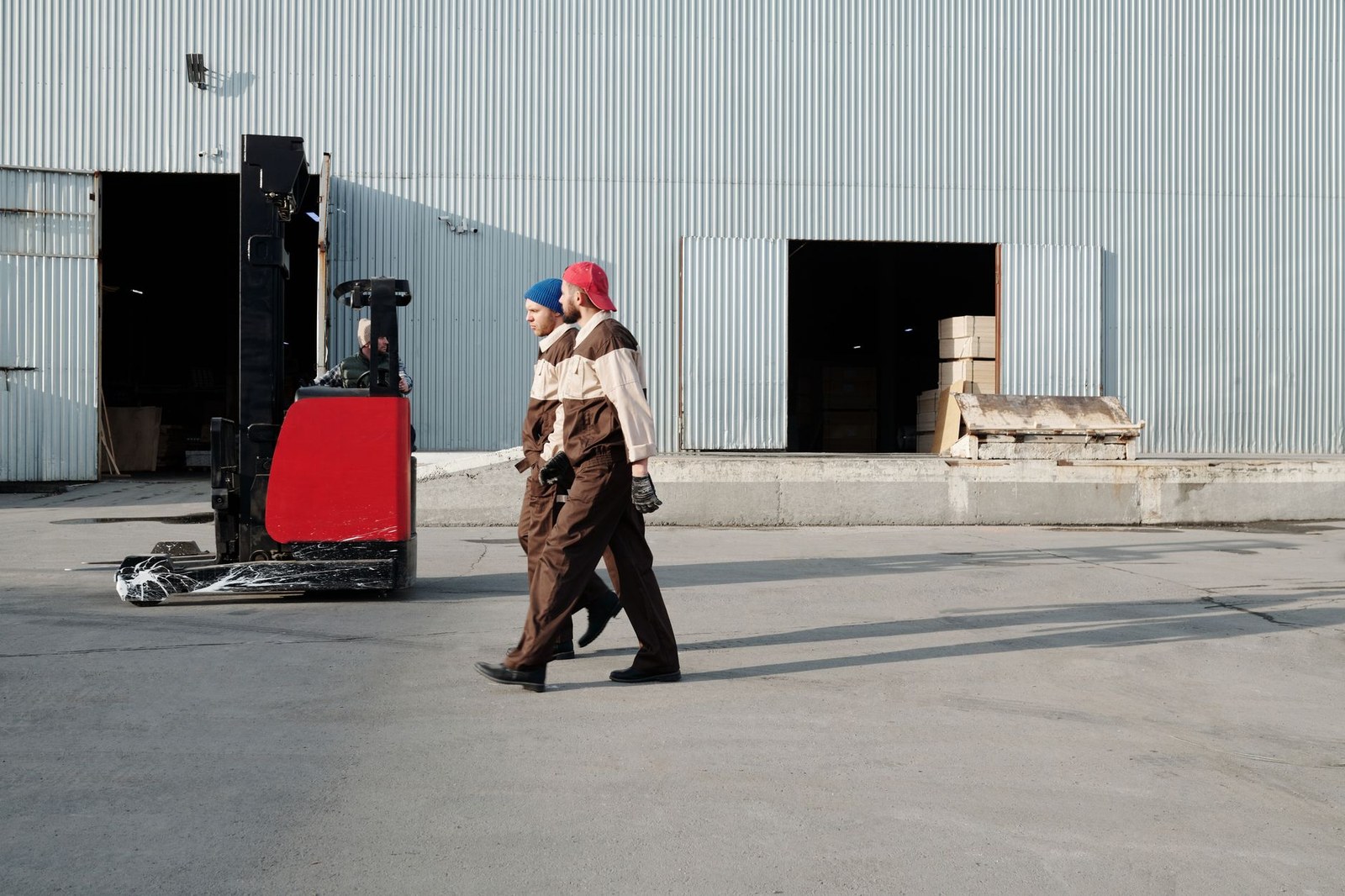
Why Location Matters: Shunde Is Not Just Any Industrial Park
Our factory sits in Shunde District, Foshan City, Guangdong Province — the densest outdoor furniture manufacturing cluster on the planet. Over 3,000 furniture-related factories operate within a 30-kilometer radius. This is not a coincidence. Shunde's 40-year history as a furniture manufacturing hub means three things for our buyers: raw material suppliers compete on quality and price within a 20-minute truck radius, experienced workers with 10-15 years of weaving and welding experience are available without relocation, and export logistics infrastructure is mature — our factory is 90 minutes from Shenzhen Yantian Port and 2 hours from Guangzhou Nansha Port.
When you visit, you will notice that our suppliers for 6063-T5 aluminum profiles, virgin HDPE rattan granules, Sunbrella-grade fabrics, and powder coating materials all operate within the same industrial zone. This proximity means we inspect raw materials at the supplier's facility before they even arrive at our loading dock — a sourcing advantage that factories in isolated locations cannot replicate. For a deeper look at how Shunde compares to other Chinese furniture regions, see our guide to furniture factory locations in China.

Factory Layout: 3 Production Zones Under One Roof
The 16,000 m² is divided into three connected zones, each with its own workflow logic. This layout allows material to flow naturally from raw stock inward to finished goods outward, minimizing forklift travel and handling damage.
| Zone | Area | Activities | Staff |
|---|---|---|---|
| Zone A: Metal Fabrication | 4,000 m² | Aluminum tube cutting, bending, TIG welding, grinding, powder coating booth, curing oven | 10 workers |
| Zone B: Weaving & Assembly | 7,000 m² | PE rattan extrusion, weaving stations, cushion sewing, frame-to-weave assembly, final assembly | 18 workers |
| Zone C: Finishing & Packaging | 5,000 m² | QC inspection stations, touch-up repair, 5-layer packaging, container loading staging | 9 workers |
The remaining 12 team members work across zones: 4 QC inspectors rotate through all three zones daily, 3 design/R&D engineers split time between the sample room in Zone B and the office, and 5 management/sales staff coordinate client communication and production scheduling from the second-floor office that overlooks the assembly floor.
Zone A Walkthrough: How We Build the Skeleton
Every SOLAIREVA product — whether PE rattan, rope weave, or full aluminum — starts as 6063-T5 aluminum tube stock in Zone A. We start with the material grade because it determines everything downstream. 6063-T5 architectural-grade aluminum has a tensile strength of 185 MPa minimum and elongation of 8%, which means it bends without cracking during tube forming and holds its shape under years of guest use. We use wall thicknesses of 1.8mm for chair frames and 2.5mm for table structures — specifications we can verify with a digital micrometer during your factory visit.
Cutting and bending: CNC tube cutters cut to ±0.5mm tolerance. Hydraulic tube benders form armrests and backrest curves in a single operation, preventing the stress fractures that occur when fabricators bend by hand and reheat. Each bent piece is checked against a steel jig template before moving to welding.
Welding: Our welding team uses TIG (tungsten inert gas) welding for aluminum frames. TIG produces cleaner welds with less spatter than MIG, which matters for outdoor furniture because spatter pits become rust initiation points. Every welded joint is ground smooth and inspected under 500-lux lighting. If a weld shows porosity — tiny gas pockets in the weld bead — the entire joint is cut out and re-welded. We do not fill porosity with body filler; that practice creates failure points that emerge 6-12 months after delivery. Our factory verification guide explains how to spot these differences during a factory visit.
Powder coating: After welding, frames move through a 7-stage pretreatment line: degreasing → rinse → acid etch → rinse → phosphate coating → rinse → drying. This pretreatment is what makes powder coat adhere and resist corrosion — skip any stage and the coating peels within 18 months. The electrostatic powder booth applies a 60-80 micron coating layer, cured at 200°C for 12 minutes. We verify coating thickness with a digital gauge on 5% of every batch and record the measurements. For coastal projects requiring maximum salt spray resistance, we can increase coating thickness to 100-120 microns. Read our certifications guide for salt spray testing standards we meet.
Zone B Walkthrough: Where the Weave Happens
Zone B is the heart of our factory — 7,000 m² dedicated to rattan extrusion, weaving, and final assembly. This is where raw HDPE granules become the woven furniture surface that guests sit on.
PE rattan extrusion: We use only virgin HDPE — no recycled content, no filler materials. Recycled HDPE rattan might save $0.12 per kilogram at the extrusion stage, but it becomes brittle in 2-3 years of UV exposure because recycled polymers have shorter molecular chains. Our virgin HDPE granules arrive with a UV stabilizer package pre-mixed by the supplier at 3% concentration. We verify stabilizer content quarterly through an independent lab — ask to see the test reports during your visit. The extrusion line runs 3 strands simultaneously, producing flat, round, and half-round profiles in diameters from 2.5mm to 4.5mm. Color is mixed into the molten HDPE before extrusion — this is why our rattan color goes all the way through the strand, not just on the surface where it would wear off.
Weaving stations: Eighteen weaving stations operate in Zone B, each with a dedicated weaver. Our most experienced weavers have 12-14 years of rattan weaving experience in Shunde. They work from 1:1 scale pattern cards mounted above each station, which specify the weave pattern (flat weave, round weave, or mixed), strand tension (measured with a hand-held tension gauge at 8-12 Newtons depending on the product), and weave density (strands per 10cm). New weavers complete a 3-month supervised training period before working on commercial orders independently. Even experienced weavers have their first 3 pieces inspected by the line supervisor each morning to catch any technique drift before it affects a full day's output.
Cushion production: In the cushion section of Zone B, industrial sewing machines assemble cushion covers from outdoor-grade fabrics. Foam cutting is done with a band saw to ±2mm tolerance. Our standard foam density is 28 kg/m³ with open-cell quick-dry construction — water drains through in under 2 minutes. For hotel pool areas with chlorine exposure, we offer 35 kg/m³ closed-cell foam that resists chemical degradation. See our materials guide for a complete breakdown of foam grades and fabric options.
The 4-Stage QC System That Keeps Defect Rate at 0.47%
Quality control at SOLAIREVA is not a final inspection checkpoint — it runs continuously across four stages embedded in the production flow. This system has kept our average defect rate at 0.47% across all orders shipped in the past 12 months.
| Stage | When | What Gets Checked | Who | Sample Rate |
|---|---|---|---|---|
| Stage 1: Incoming Material | Before production | Aluminum wall thickness, HDPE UV stabilizer content, fabric color batch, foam density | QC team + supplier certs | 100% of deliveries |
| Stage 2: In-Production | During production | Weld quality, weave tension, powder coat thickness, cushion stitching | Line supervisors + worker self-check | 10% hourly sampling |
| Stage 3: Finished Goods | Before packaging | 12-point checklist: dimensions, color match, weave uniformity, frame stability, sharp edges, hardware fit, cushion fill, labeling | Dedicated QC inspectors | 100% of pieces |
| Stage 4: Pre-Shipment | Container loading queue | AQL 2.5 Level II random sampling of packed cartons: open, inspect, repack | QC team lead | Per AQL tables |
Stage 1 is the most important because it prevents problems before they start. We reject aluminum profiles that measure below 1.75mm wall thickness (against a 1.8mm spec) — a 0.05mm tolerance that matters when chairs carry 150kg guests daily for years. We reject fabric bolts where the color delta is outside the ΔE < 2.0 tolerance band compared to the approved master swatch. These upstream rejections are why you rarely see quality issues in the finished product — the bad material never reaches production. Our OEM quality control guide walks through each checkpoint in more detail.
Zone C: Packaging That Survives 12,000 km of Ocean Transit
Good furniture badly packaged arrives as damaged furniture — and shipping damage claims are one of the most frustrating experiences for importers. Our 5-layer packaging system is designed to survive container transit from Shunde to any port in the world with less than 0.3% transit damage reported.
Layer 1: Each piece gets polyethylene foam wrapping on all contact surfaces — armrests, corners, legs.
Layer 2: Corrugated cardboard corner protectors (5mm thick, double-wall) on all 8 corners of every frame.
Layer 3: Individual pieces go into 5-layer export-grade corrugated cartons with foam partitioning when multiple pieces share a box.
Layer 4: Cartons are palletized on fumigated ISPM-15 heat-treated wood pallets, stretch-wrapped with 3 layers of 80-gauge film.
Layer 5: In the container, pallets are positioned with blocking and bracing using timber struts screwed to the container floor channels. Weight distribution is calculated to keep the center of gravity within the container's lateral tolerance.
Cushions are vacuum-compressed to 40% of their original volume before boxing, which recovers to full shape within 24 hours of unpacking. Glass tabletops are crated individually in plywood cases with 20mm of foam separation. For mixed-container orders, we load heavy items (dining tables, daybed frames) at the bottom and lighter items (chairs, cushions) on top. The full container loading protocol is detailed in our container loading guide.
Sample Room: Where Your Custom Design Comes to Life
Adjacent to Zone B, the sample room is where our 3-person R&D team builds prototypes from your technical drawings. This 300 m² space contains a scaled-down version of every production capability — a small powder coating booth, 3 weaving stations, a CNC tube bender, and an industrial sewing machine. The sample room operates independently from the production line, so prototype development does not interrupt commercial orders.
When you submit a custom design request with technical drawings, the sample room produces a first prototype in 15-20 working days depending on complexity. The prototype goes through full QC inspection, and we ship high-resolution photos from 12 angles plus a 2-minute video showing the piece being sat on, moved, and stacked before asking for your approval. Two modification rounds are included in the standard sample development process. Once you sign off on the prototype, it is archived in our sample library for 5 years as the master reference for future reorder matching. Learn more about this process in our OEM process guide.
Production Capacity: What We Deliver Each Month
Numbers are easy to claim and hard to verify. Here is our actual output based on shipping records from the past 12 months:
| Product Category | Monthly Output (40HQ Containers) | Lead Time (Standard Order) |
|---|---|---|
| PE Rattan Dining Sets | 6-8 containers | 35-45 days |
| PE Rattan Sofa/Lounge Sets | 4-6 containers | 40-50 days |
| Aluminum Frame Furniture | 5-7 containers | 30-40 days |
| Custom/Mixed Orders | 3-5 containers | 45-60 days |
| Total Monthly Average | 15+ high-cube containers | — |
During peak season (January through April, when buyers place orders for Northern Hemisphere summer delivery), we can increase output by approximately 25% through overtime shifts and temporary line expansion. Rush orders — projects that need to ship in under 30 days — are evaluated case by case. We can often accommodate them by shifting standard-order production to overtime slots, but rush orders typically carry a 5-8% price increase to cover overtime labor costs. For planning your procurement timeline, see our MOQ and lead time guide.
The Team Behind the Numbers
A factory is not square meters and machinery — it is people. Our 49-person team breaks down into functions that cover the full journey from raw material to container loading:
- 32 production workers — 10 in metal fabrication (Zone A), 18 in weaving and assembly (Zone B), 4 in packaging (Zone C)
- 4 QC inspectors — one assigned to each zone plus one floating inspector who performs pre-shipment AQL sampling
- 3 design/R&D engineers — based in the sample room, handle custom design interpretation, prototype building, and production engineering
- 5 logistics/packaging specialists — manage container booking, loading plans, export documentation, and packaging material inventory
- 5 management/sales staff — client communication, production scheduling, order tracking, and after-sales support
We recruit from the Shunde workforce ecosystem where furniture manufacturing skills pass across generations. The average tenure of our production workers is 4.2 years. This matters because furniture manufacturing has a steep quality curve — a weaver with 5 years of experience produces consistent tension and density that a 6-month weaver simply cannot match. Our factory page has photos and additional details about each production area.
Certifications and Compliance: What Is On the Wall
On the wall of our main office, you will find the certifications that matter for commercial outdoor furniture export. We maintain:
- ISO 9001:2015 — Quality management system certification covering design, production, and after-sales service for outdoor furniture
- BSCI (Business Social Compliance Initiative) — Social compliance audit covering working conditions, wages, hours, and safety
- FSC Chain of Custody — For projects requiring certified wood sourcing (teak, acacia components)
- EN 581 (EU) — European standard for outdoor furniture safety, strength, and durability
- ASTM F1858 (US) — American standard for outdoor furniture performance requirements
For projects requiring additional certifications — California Prop 65 compliance, GCC/GSO standards for Gulf countries, or specific retailer compliance programs — we work with third-party testing labs (SGS, TÜV, Intertek) on a per-project basis. Testing costs are typically shared between SOLAIREVA and the buyer depending on order size. Full details on each certification and what it actually means for your order are in our certifications guide.
FAQs About Visiting and Working with Our Factory
Can I visit the factory before placing an order?
Yes, and we encourage it. A factory visit is the single best way to verify everything this article describes. We provide airport pickup from Guangzhou Baiyun International Airport (CAN) and can recommend nearby hotels. Most visits take 4-6 hours. You will walk through all three production zones, inspect the QC documentation, and review our sample library. Schedule through our contact page at least 2 weeks in advance.
What should I look for during a factory visit?
Check lighting quality on the production floor (good QC requires 500+ lux), look at the welding area for grinding marks and spatter, ask to see the micrometer they use for wall thickness checks, ask for the last 3 months of QC rejection logs, and look at the sample room organization — a messy sample room often indicates a factory that cuts corners. Our factory audit checklist has a complete 27-point inspection framework.
How far in advance do I need to place an order?
Standard lead time is 35-50 days from deposit to container loading, depending on product complexity. Add 2-3 weeks for ocean freight to most destinations. For peak season delivery (arriving April-June in the Northern Hemisphere), we recommend placing orders by December-January to secure production slots. Off-peak orders placed August-November typically have shorter lead times and more negotiation flexibility on MOQ.
Do you produce for other brands or only for SOLAIREVA?
SOLAIREVA is our own brand, but we operate a full OEM/ODM service where we manufacture furniture under your brand. Your designs, your logo, your packaging — produced on the same lines with the same QC standards. Design confidentiality is protected through NDAs and our internal policy that customer-owned designs are never shown to other buyers. See our OEM/ODM page for details.
See the Factory for Yourself
The best way to evaluate a furniture manufacturer is to watch them work. Walk the production floor. Check the QC logs. Meet the weavers. Test the furniture that is coming off the line today — not samples that were prepared for a showroom. Our Shunde factory is open to qualified buyers year-round, and we welcome the scrutiny.
Send us your project requirements and preferred visit dates, and we will prepare a tailored factory tour that focuses on the production areas most relevant to your order — whether that is PE rattan weaving for a resort project, aluminum fabrication for a coastal hotel, or custom OEM development for your private label brand.