What OEM Outdoor Furniture Manufacturing Actually Involves
OEM (Original Equipment Manufacturing) in outdoor furniture means you provide the design specifications, and the factory builds the product to your requirements — using your brand, your selected materials, your approved finishes. Unlike standard catalog purchases, OEM lets you control dimensions, frame construction, cushion density, fabric grades, powder coat colors, packaging design, and branding.
At SOLAIREVA, the OEM process follows a structured 5-stage workflow. Each stage has defined deliverables, typical timelines, and decision gates where your approval is required before we proceed. No surprises, no hidden steps.
What OEM is not: it is not a free-form "make something like this photo" process. A clear technical package is the difference between getting exactly what you want and getting something that is merely close. The more precise your documentation upfront, the more accurate your sample and production will be.
Most OEM projects at SOLAIREVA fall into three categories: (1) modifying an existing catalog design with custom dimensions or materials, (2) developing a completely new design from your drawings, or (3) private labeling our proven designs under your brand. Each follows the same five stages below, though timelines shift depending on complexity.
Stage 1: Design Submission & Technical Documentation
Every OEM project starts with your technical package. This is the foundation of the entire project, and rushing through it is the single biggest source of delays we see from first-time buyers.
What we need from you:
- 2D dimensioned drawings — showing all key measurements: overall width, depth, height, seat height, arm height, and critical clearances. Hand sketches with measurements are acceptable; CAD files (DWG, DXF) are ideal.
- Reference images — photos of similar products you like, noting which specific elements you want to replicate (arm shape, leg design, weave pattern).
- Material preferences — frame material (aluminum 6063, steel, teak), weave type (flat PE rattan, round PE rattan, rope), cushion foam density, and fabric grade.
- Finish specifications — preferred powder coat color (RAL code if known), cushion fabric color, and any special surface treatments.
- Target budget or price range — this helps our engineering team propose material and construction methods that stay within your cost parameters from day one, rather than designing something beautiful but unaffordable.
- Branding requirements — logo placement, size, and application method (laser engraving on aluminum, embroidery on cushions, woven labels, hang tags).
What we do: Our engineering team reviews your package within 2–3 business days. We identify any feasibility issues — for example, if a requested seat depth creates structural concerns, or if a specific weave pattern requires a different frame profile. We return a technical review document with our feasibility assessment, any recommended adjustments, and a preliminary production timeline.
This stage ends when both parties sign off on the technical review. If your package is incomplete, expect follow-up questions — we will not proceed to sampling with unclear specifications. For more on preparing effective design documentation, see our detailed QC and specification guide.
Stage 2: Sample Development & Approval
Once the technical package is approved, we move into sampling. This is where your design becomes physical for the first time.
Sample development timeline by complexity:
- Catalog modification (changing dimensions or materials of an existing design): 10–15 business days
- Semi-custom design (new silhouette based on existing construction methods): 15–25 business days
- Fully custom design (new frame tooling required, new weave patterns, complex mechanisms): 25–40 business days
For fully custom designs that require new aluminum extrusion molds or specialized welding jigs, tooling costs apply — typically $300–$1,200 per mold depending on profile complexity. These molds remain your property and are stored at our factory for future reorders.
The sample review process: We ship the sample to you (air freight, typically 5–7 days transit). You evaluate it against your specifications: dimensions, comfort, finish quality, color accuracy. Document any revisions in writing — photos with annotations work best. We implement revisions (typically 7–10 days per revision round) and ship a revised sample if needed. Most projects require 1–2 revision rounds before final approval.
Key decision at this stage: You sign off on the approved sample. This sample becomes the production reference standard — every unit in your order is built to match it. We archive a sealed reference sample in our sample room for reorder consistency. Learn more about how we manage the full private label journey from sample to delivery.
Stage 3: Production Planning & Material Procurement
With the approved sample locked, production planning begins. This stage ensures every material, component, and process is ready before the production line starts.
Material procurement: We source aluminum profiles from our certified 6063-T5 suppliers, PE rattan from virgin HDPE stock, Sunbrella or equivalent performance fabrics, quick-dry foam, and tempered glass where specified. For custom color requirements, powder coat is mixed to your RAL specification and tested on sample panels for color accuracy (our target: ΔE < 2.0).
Production scheduling: Your order is slotted into our production calendar based on order size and complexity. We provide a detailed production timeline showing:
- Material arrival dates
- Frame welding and assembly window
- Weaving schedule (for rattan pieces)
- Powder coating batch dates
- Cushion cutting and sewing window
- Final assembly and QC dates
- Packaging and loading week
For standard orders (50–300 pieces), production typically takes 25–35 working days from material arrival to finished goods. Our 16,000 m² Shunde factory runs multiple production lines in parallel, so we can handle concurrent projects without compromising individual timelines.
MOQ considerations: OEM projects carry minimum order quantities that vary by product type and customization level. Generally, expect MOQs of 20–50 units per SKU for aluminum frame products and 30–80 for fully custom rattan designs. See our complete MOQ strategy guide for detailed breakdowns and negotiation approaches.
Stage 4: Quality Control During Production
Quality control in OEM production is not a single end-of-line check — it is embedded at four points throughout manufacturing.
1. Incoming material inspection: Every batch of raw material is checked on arrival. Aluminum profiles are measured for wall thickness and alloy composition. PE rattan is tested for UV stabilizer content and color batch consistency. Fabric is checked against approved swatches under standardized lighting.
2. In-process QC (IPQC): At 30% and 70% production completion, our QC team pulls random units from the line and checks them against the approved sample. Measurements, weld quality, weave tension, and finish consistency are verified. Any deviation triggers immediate correction before the batch continues.
3. Pre-shipment inspection (PSI): When production reaches 100% completion and at least 80% of goods are packed, a final AQL (Acceptable Quality Limit) inspection is performed. We use AQL 2.5 Level II as standard, with AQL 1.0 available for premium projects. Your third-party inspector is welcome at any stage — we coordinate access and provide documentation.
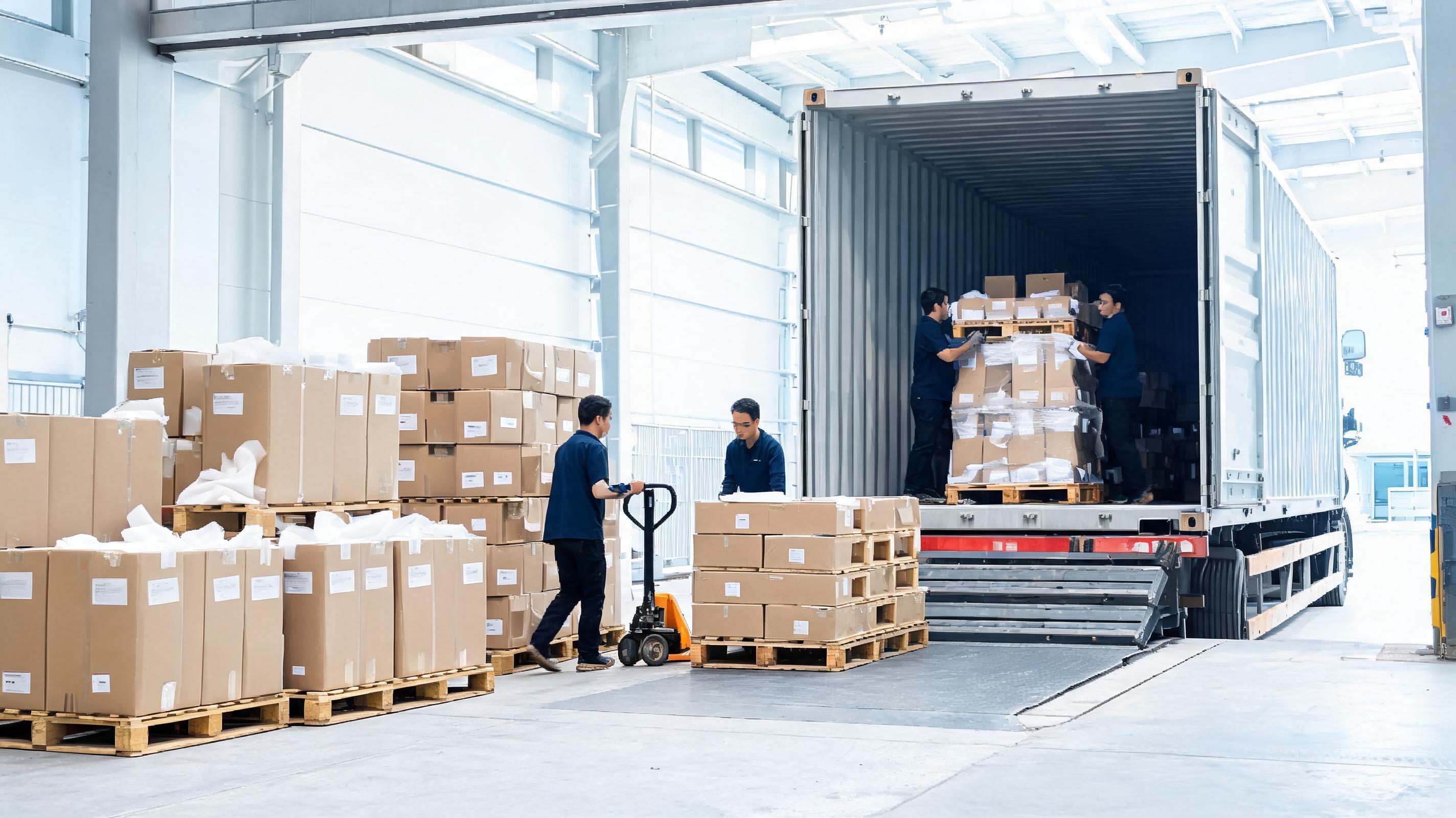
4. Loading supervision: A QC supervisor is present during container loading to verify carton counts, check for packaging damage during loading, and photograph the loaded container before sealing. You receive these photos as part of your shipping documentation package.
For a deeper dive into each QC checkpoint and what to look for at each stage, refer to our QC checkpoint guide.
Stage 5: Packaging, Loading & Shipping
The final stage ensures your custom furniture arrives in the same condition it left our factory.
Export packaging standard: We use a 5-layer protection system for OEM orders: (1) PE foam wrapping on all finished surfaces, (2) corrugated cardboard edge protectors on frame corners, (3) individual carton boxing with product-specific internal bracing, (4) moisture-barrier lining in each carton for ocean freight, and (5) palletized or floor-loaded configuration based on product fragility and container optimization.
Container loading planning: We calculate carton dimensions and weight before loading day to optimize container space utilization. For mixed OEM orders (multiple SKUs in one container), we create a loading plan that groups similar carton sizes together and distributes weight evenly. Our typical container utilization rate is 85–92% for furniture — meaning you pay for minimal empty space.
Documentation package: Before the container departs, you receive: packing list with carton numbers and contents, commercial invoice, bill of lading, loading photos (exterior and interior views), and QC inspection report. For markets requiring fumigation certificates, Form A, or other export documentation, we coordinate with our freight forwarder to provide these.
For detailed information on container capacity calculations and shipping logistics, see our container loading calculator and export logistics guide.
Typical OEM Project Timeline Summary
Based on projects completed at SOLAIREVA, here are realistic end-to-end timelines:
| Project Type | Design & Sampling | Production | Shipping | Total (Est.) |
|---|---|---|---|---|
| Catalog modification (50 pcs) | 3–4 weeks | 4–5 weeks | 3–5 weeks | 10–14 weeks |
| Semi-custom design (100 pcs) | 4–6 weeks | 5–7 weeks | 3–5 weeks | 12–18 weeks |
| Full custom design (200+ pcs) | 6–10 weeks | 6–10 weeks | 3–5 weeks | 15–25 weeks |
These timelines assume one revision round during sampling. Each additional revision adds approximately 2 weeks. The single biggest factor you control: the completeness and clarity of your initial technical package. Investing an extra week in documentation typically saves 3–4 weeks of back-and-forth during sampling.
Frequently asked questions about OEM outdoor furniture
What is the minimum order quantity for OEM outdoor furniture?
For aluminum frame products, OEM MOQ typically starts at 20–50 units per SKU. For fully custom rattan designs requiring new molds, MOQ is 30–80 units. Mixed-container orders allow you to combine multiple SKUs to meet total volume requirements. Contact our team with your product type for a specific MOQ based on your design.
How long does OEM sample development take?
Catalog modifications: 10–15 business days. Semi-custom designs: 15–25 business days. Fully custom designs with new tooling: 25–40 business days. Add 5–7 days for air freight shipping to your location.
What documents do I need to provide to start an OEM project?
At minimum: dimensioned drawings (hand sketch or CAD), reference images of similar products, material preferences, target budget range, and branding requirements. The more complete your technical package, the faster we can deliver an accurate sample.
Can I mix OEM custom products with standard catalog items in one container?
Yes. Many buyers combine OEM custom designs with standard SOLAIREVA products in mixed containers. This approach helps meet total container volume while testing custom designs with a smaller initial quantity. Our production planning team coordinates the timeline so both custom and standard items are ready for the same loading date.
How do you protect my custom designs from being sold to other clients?
We sign a mutual NDA before any design files are shared. Your custom molds, jigs, and tooling are stored separately and used exclusively for your orders. Approved production samples are archived under your account with restricted access. We have never sold a client's custom design to another buyer in our 20+ years of manufacturing.
Start your OEM project with SOLAIREVA
Whether you are launching a private label outdoor furniture brand, outfitting a hotel chain with custom pieces, or adapting an existing design for a specific project requirement, the OEM process becomes straightforward when you work with a manufacturer that has clear systems in place.
At SOLAIREVA, we have completed OEM projects for hotel groups across Europe, resort developments in the Maldives and Southeast Asia, restaurant chains in the United States, and private label brands in the Middle East. Our engineering team reviews your package within 3 business days, and we provide transparent timelines and pricing from the first conversation.
Next steps: Prepare your technical package (drawings, reference images, material preferences) and submit an RFQ. Or explore our OEM and ODM capabilities to see examples of customization options across materials, finishes, and branding.