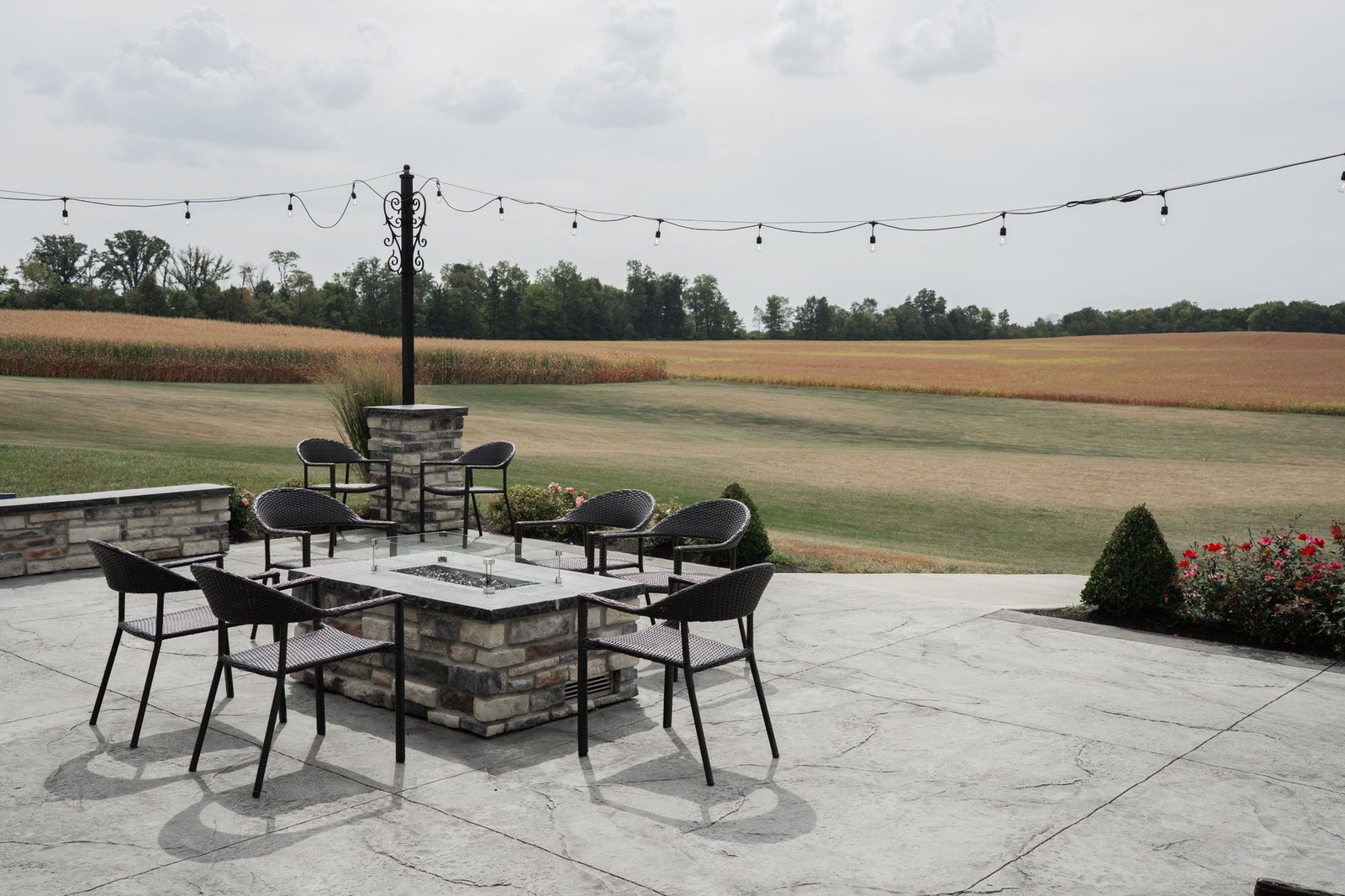
What an aluminum outdoor furniture order specifies
An aluminum outdoor furniture order is specified by alloy, tube wall thickness, coating system and joint method before colour or weave is discussed. In 2026 most contract frames ship in 6063-T5 extrusion at 1.5 mm wall, powder coated to 60 to 80 microns dry film, with welded seat rails and A2 stainless fasteners. A 1.2 mm frame in the same shape weighs about 20 percent less and quotes 8 to 12 percent lower, and it is also the frame that develops wobble on a restaurant terrace within two seasons. Those four lines belong in the purchase order, not in a supplier's brochure.
Buyers usually open with colour, weave pattern and a photo. Those are the easiest parts of the order and the cheapest to change later. The extruded section underneath decides how the chair carries a 110 kg guest, how many pieces fit a container and how the finish looks after three summers of salt air.
The table below is the frame specification sheet we complete with a buyer on the first call, with the retail default next to the contract requirement.
| Specification line | Retail default | Contract requirement |
|---|---|---|
| Alloy and temper | 6063-T5, certificate often missing | 6063-T5 with mill certificate per heat number |
| Tube wall | 1.1-1.2 mm | 1.5 mm standard, 2.0 mm public areas |
| Main section | 22-25 mm round tube | 25-32 mm round, 30x20 oval, 40x20 rectangle |
| Coating | Polyester powder, 40-60 microns | Polyester 60-80 microns or AAMA 2604 |
| Pretreatment | Degrease and single rinse | Five-stage chromate-free conversion coating |
| Joints | Self-tapping screws, splice sleeves | Full-penetration weld plus internal gusset |
| Fasteners | Zinc-plated steel | A2 or A4 stainless with nylon isolation |
| Test standard | None stated | EN 581-1 with EN 581-3 or EN 16139 |
| MOQ | No stated minimum | 30-50 pcs existing die, 200-300 new die |
| Packing | Single piece, foam wrap | 4-6 per carton, corner protectors, stack plan |
A quotation that lists "aluminum frame, powder coated" and nothing else leaves the four lines above open. That is where the price gap between two suppliers quoting the same photo comes from, and it is also why a sample chair sometimes feels different from the container that follows it.
6063-T5 against 6061-T6: which alloy belongs in a frame
6063-T5 is the default alloy for furniture extrusions, with minimum tensile strength around 152 MPa and yield near 110 MPa, plus a smooth surface that takes powder evenly. 6061-T6 reaches roughly 290 MPa tensile and 240 MPa yield and appears where a slender member carries real load, such as a cantilever umbrella arm or a long table beam. Both are heat-treated aluminum and both resist corrosion. The choice between them is settled by which alloy can be extruded into the section the designer drew, at a wall thin enough to keep the piece light.
6063 extrudes complex shapes well. Thin walls, sharp internal corners, oval sections and the hollow seat rails used under woven furniture all come out of a 6063 die with a clean surface. 6061 is harder to push through a die, wears tooling faster and costs more per kilogram, which is why it turns up in structural parts rather than in chair backs. Aluminum outdoor dining furniture from China is 6063-T5 in almost every contract quote we compare, and the exceptions are structural members welded onto an otherwise 6063 frame. Welding matters here too: it pulls strength out of the heat-affected zone in a T6 part unless the frame is re-aged afterwards, and most furniture factories weld and then coat.
| Property | 6063-T5 | 6061-T6 |
|---|---|---|
| Tensile strength | About 152 MPa minimum | About 290 MPa minimum |
| Yield strength | About 110 MPa | About 240 MPa |
| Extrusion of thin, complex sections | Excellent | Difficult below 1.5 mm |
| Surface finish after anodizing | Very good | Good, more streaking |
| Welding | Common, strength mostly retained | Heat-affected zone loses temper |
| Typical use in furniture | Chairs, tables, sofa frames, loungers | Cantilever arms, heavy table beams, brackets |
Verification is simple and cheap. Ask for the mill certificate for the heat number on the extrusion bundle and read alloy and temper on the document. A magnet tells you whether the tube is aluminum at all, since steel reacts and aluminum does not. For a closer check, a conductivity meter separates 6063 from 6061 within a few seconds, and most extrusion mills will run that test on request.
Wall thickness: what 1.2 mm, 1.5 mm and 2.0 mm change on site
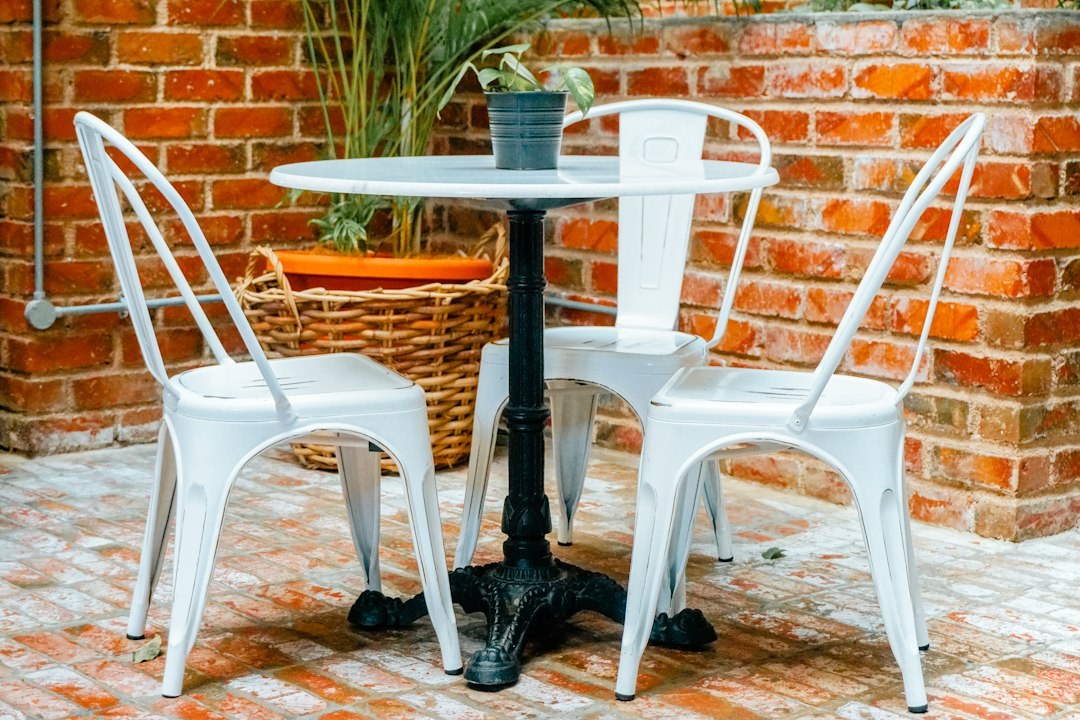
Wall thickness decides how a frame behaves after two seasons of daily use, and in our quotation sheet 1.5 mm is the line between contract and retail. A 25 mm round tube at 1.2 mm wall deflects visibly when a 110 kg guest pushes back from the table, while the same tube at 1.5 mm holds its shape through the EN 581 static seat load of 1,600 N. Moving to 2.0 mm adds 0.8 to 1.2 kg per chair and suits public plazas and rooftop bars where furniture is stacked and dragged every day.
Stiffness rises roughly in step with wall thickness on a thin tube, so 1.2 mm to 1.5 mm buys about 25 percent more resistance to bending for 25 percent more aluminum. That is the cheapest upgrade in the whole specification. The weight cost is small: on a 600-chair order, 1.5 mm against 2.0 mm differs by roughly 500 to 700 kg of cargo, well inside a 40HQ payload.
| Application | Wall thickness | Chair weight (approx.) | Expected service |
|---|---|---|---|
| Home terrace, seasonal use | 1.2 mm | 3.5-4.5 kg | 3-5 years |
| Boutique hotel, restaurant terrace | 1.5 mm | 4.5-6 kg | 6-8 years |
| Resort pool deck, beach club | 1.5-1.8 mm | 5-6.5 kg | 7-10 years |
| Public plaza, rooftop bar, stadium | 2.0 mm | 6-8 kg | 8-12 years |
| Cast aluminum Chippendale | 3-5 mm cast sections | 7-10 kg | 10-15 years |
Section shape matters as much as the wall. A 40x20 mm rectangular tube at 1.5 mm resists a twisting load better than a 25 mm round tube at the same wall, which is why well-built stacking chairs use rectangle profiles at the seat rail and round tube only where the hand touches. Ask for the section drawing rather than the wall number alone, and check that the seat rail has a gusset where the leg meets it.
The relevant standards are EN 581-1 for safety, EN 581-2 for domestic seating and EN 581-3 for contract and public seating, with EN 16139 covering non-domestic seating strength and durability. A supplier working to those standards can send a test report per model from a third-party laboratory. A supplier working from photos cannot.
Powder coat, anodized and PVDF finishes for coastal air
Powder coating at 60 to 80 microns dry film over a five-stage chromate-free pretreatment is the working finish for aluminum outdoor furniture, and it holds 500 to 1,000 hours of ASTM B117 salt spray depending on the powder family. Inland terraces are served well by standard polyester at 60 microns. Beachfront hotels need an AAMA 2604 powder at 70 to 80 microns, because the salt spray result comes from the pretreatment line and the powder together, not from the colour card.
Pretreatment is where cheap frames fail. The five stages are alkaline degrease, rinse, acid etch, rinse and a chromate-free conversion coating before a dry-off oven. Skip the conversion coating and the powder sits on bare metal with nothing to bond to. The failure shows up as filiform corrosion creeping from a scratch or a cut edge, usually in the second year, on a frame that looked perfect at delivery.
| Finish | Thickness | Salt spray (ASTM B117) | Best use |
|---|---|---|---|
| Polyester powder, standard | 60-70 microns | 500 hours | Inland terraces, garden furniture |
| Polyester powder, AAMA 2604 | 70-80 microns | 1,000 hours | Coastal hotels, pool decks |
| PVDF (70% Kynar) | 25-35 microns | 1,500-2,000 hours | Marine sites, 15-year colour warranty |
| Anodized, clear or bronze | 10-20 microns | No coating to chip | Metallic look, high-touch surfaces |
| Wood-grain powder | 70-90 microns | 500-1,000 hours | Aluminum that should read as timber |
Anodizing is a different product: the oxide layer grows out of the aluminum itself, so it cannot chip or peel and it keeps a metallic sheen. The colour range stops at clear, champagne, bronze and black, and a deep scratch shows the raw metal underneath. PVDF costs 25 to 40 percent more than polyester powder and is the option for a marine site with a 15-year facade warranty to match. Our 304 and 316 stainless guide covers the metal choice for the same coastal conditions.
Cast aluminum and the vintage Chippendale request
Chinese Chippendale outdoor furniture in vintage aluminum is cast. The lattice back, cabriole leg and pierced splat come out of a sand mould or a gravity die, which introduces tooling between USD 600 and 8,000 per pattern and a minimum of 50 to 200 pieces per finish. Cast sections run 3 to 5 mm thick, so a cast dining chair weighs 7 to 10 kg against 4 to 6 kg for a tubular frame. The weight, the mould parting line and the tap sound identify a genuine cast piece.
Buyers come to this style for hotel gardens, heritage properties and restaurants that want the 1890s garden look with the maintenance profile of aluminum. Chinese foundries produce it well, and the failures are predictable: hollow castings under 2.5 mm, filler used to hide porosity, and powder coat sprayed over sand-textured surfaces without enough preparation, which leaves a pitted finish that collects dirt. A cast chair should ring when tapped and feel cold and dense in the hand.
Two substitutions appear in this category. The first is cast iron, which is cheaper per piece and 40 to 60 percent heavier, and which rusts once the coating chips at a foot. The second is stamped steel formed to look like a casting. A magnet identifies both: cast aluminum does not respond, steel and iron do. Ask for the piece weight in the quotation and weigh one sample on arrival, because a 4 kg "cast" armchair is a hollow imitation.
Aluminum against steel, teak and PE rattan on an aluminum frame
An aluminum dining chair weighs 4 to 6 kg where the same shape in powder-coated steel weighs 7 to 9 kg, and on a 600-chair order that gap comes to about 1.5 tonnes of cargo. Aluminum frames cost 15 to 30 percent more per unit at equal section. Steel is stiffer and cheaper. Aluminum keeps its finish on a pool deck without rust bleeding from a scratched leg, and that difference decides most coastal hotel orders before price is discussed.
| Frame | Chair weight | Corrosion behaviour | Cost index | Maintenance |
|---|---|---|---|---|
| 6063-T5 aluminum | 4-6 kg | Oxide layer, no rust; white powder in salt air | 115-130 | Rinse quarterly, touch-up pen on chips |
| Powder-coated steel | 7-9 kg | Rust at chips and welds | 100 | Annual inspection of feet and welds |
| Cast aluminum | 7-10 kg | Very good, thicker sections | 130-160 | Rinse, occasional re-coat after 8 years |
| Teak | 8-12 kg | No corrosion, silver-grey weathering | 160-220 | Oil annually or leave to weather |
| PE rattan over aluminum | 5-8 kg | Frame protected, weave is the wear part | 110-140 | Wash weave, re-weave after 5-8 years |
Woven furniture usually hides an aluminum frame underneath, so the weave choice and the frame choice are two separate decisions. Our comparison of PE rattan and exposed aluminum covers where each surface suits a project, and the UV resistance guide covers how the polymer and the coating age in strong sun. For a pool deck, aluminum plus textilene sling is the combination that survives chlorine and a nightly hose-down with the least maintenance.
Five checks that catch a wrong alloy before shipment
Five checks on a pre-shipment sample catch nearly every aluminum substitution we see in incoming inspection: wall thickness, alloy certificate, coating thickness, weld quality and a load test. The set takes one working day with a micrometer, a coating gauge, a magnet and the mill certificate. Buyers who skip it usually meet the problem on the terrace in month three, and a 1.2 mm frame ordered as 1.5 mm cannot be corrected with a credit note once the chairs are installed.
- Cut one sample part per model and measure the wall at five points with a micrometer. A 1.5 mm order should read 1.35 to 1.55 mm. A reading near 1.15 mm is a substitution.
- Read the mill certificate for the extrusion heat number and confirm 6063-T5. Drop a magnet on the frame: steel responds, aluminum does not.
- Measure coating thickness on faces, edges and welds. Contract work runs 60 to 80 microns, and edges below 40 microns are where coastal corrosion starts.
- Inspect every load-bearing joint for full penetration, porosity and burn-through, plus a gusset or sleeve at cantilever sections. Grinding marks over a crack are a repair.
- Apply the EN 581 static seat load of 1,600 N and run the stack plan the container will use. Visible deflection or creaking at that load predicts a short service life.
Sampling follows the usual AQL logic: 2.5 for major defects such as wall thickness and weld failure, 4.0 for minor cosmetic issues. Photograph each check with the tape measure or gauge in frame, file the photos with the mill certificate, and send the set with the shipping documents. That file is what a warranty claim rests on two years later, as covered in our warranty coverage guide. Buyers shortlisting an aluminum outdoor dining furniture supplier in China can run the same five checks on two samples and learn more than a factory video will show.
MOQ, lead time and 2026 FOB bands
MOQ for aluminum frames is 30 to 50 pieces per model per colour when the die exists, and 200 to 300 pieces when a new extrusion die has to be cut at USD 800 to 2,500 and 12 to 18 days. Stock models ship 30 to 40 days after deposit, and a full ODM chair with new die, weave and cushion programme runs 55 to 70 days. The MOQ conversation is a tooling conversation, so ask which part of a quotation is die amortisation and which part is the piece price.
| Item | MOQ, existing die | MOQ, new die | Lead time | 2026 FOB band |
|---|---|---|---|---|
| Aluminum dining chair | 30-50 pcs | 200-300 pcs | 30-40 days | USD 28-55 |
| Cast Chippendale chair | 50 pcs | 100-200 pcs | 45-60 days | USD 55-115 |
| Sling sun lounger | 30-50 pcs | 150-250 pcs | 35-45 days | USD 65-135 |
| 8-seat aluminum dining table | 20-30 pcs | 100-150 pcs | 35-45 days | USD 110-220 |
| 4-piece modular sofa set | 20-30 sets | 80-120 sets | 40-50 days | USD 420-980 |
Those bands are FOB Foshan or Shenzhen for 500 to 1,000 pieces in one order, and they move with three variables: wall thickness, coating system and cushion specification. Cushions add 20 to 35 percent to a seating set and are quoted separately because fabric and foam are priced by weight and density. Custom colours in a low MOQ usually mean a powder batch surcharge of USD 150 to 400 per colour, which can be avoided by choosing from the RAL range the factory already stocks.
How many aluminum chairs fit in a 20ft or 40HQ container
A 40HQ takes about 62 to 65 cubic metres of usable carton volume, and stackable aluminum chairs pack four to six per carton at 0.35 to 0.45 m3, which lands 550 to 700 chairs in one container. Cast Chippendale chairs drop that to 350 to 450 because cartons are bulkier and cargo weight rises faster than volume. Work from carton dimensions, since the assembled chair gives no useful container figure. Ask for the pack plan with the quotation: stack height, carton count and total CBM are the three numbers that show whether a China aluminum outdoor furniture order ships in one box or two.
A worked example from a recent hotel order: four chairs per carton at 60 x 60 x 112 cm gives 0.403 m3 per carton. At 63 m3 usable, the container holds 156 cartons, which is 624 chairs. At 4.8 kg per chair plus carton weight, the cargo comes to roughly 3.3 tonnes, so volume fills the box long before the payload limit is reached. A 20ft holds about 28 m3 usable and takes 260 to 300 of the same chairs. A modular aluminum outdoor furniture set fills four to five cartons on its own, which is why set pricing and per-piece pricing rarely land on the same number.
| Product | Carton contents | Carton volume | 40HQ quantity |
|---|---|---|---|
| Stacking aluminum chair | 4-6 pcs | 0.35-0.45 m3 | 550-700 pcs |
| Cast Chippendale chair | 2-4 pcs | 0.45-0.60 m3 | 350-450 pcs |
| Sling sun lounger | 2 pcs | 0.55-0.70 m3 | 170-220 pcs |
| Aluminum dining table | 1 pc, knocked down | 0.30-0.55 m3 | 110-190 pcs |
| Modular sofa set | 1 set, 4-5 cartons | 2.2-3.0 m3 | 20-28 sets |
Mixed orders change the answer. A hotel that orders 300 chairs, 60 loungers and 30 tables usually needs a loading plan rather than a total, because long table cartons cannot be stacked on chair cartons and the top deck fills differently. Our container loading guide covers deck planning, and the 20ft and 40HQ calculator turns carton dimensions into a first estimate.
Frequently asked questions about aluminum outdoor furniture
These six answers cover what buyers ask before placing an aluminum order with a Chinese factory: strength for hospitality use, wall thickness, corrosion, price bands, minimum quantity and how to verify the alloy. Each answer stands alone and can go into an internal approval note. The short version for a hotel or restaurant project is 6063-T5 at 1.5 mm wall, 70 to 80 micron AAMA 2604 powder, EN 581-3 testing, 30 to 50 pieces per model on an existing die and 30 to 40 days of production after deposit.
Is aluminum strong enough for hotel and restaurant furniture?
Yes, when the frame is specified by wall thickness and tested to a furniture standard. A 6063-T5 frame at 1.5 mm wall with welded seat rails carries the EN 581 static seat load of 1,600 N (about 163 kg) plus the repeated-load cycles used for contract seating. Frames fail on hotel terraces when the wall is 1.2 mm, the joints are spliced rather than welded, or a retail pattern is used at 300 covers a day. Ask for the EN 581-3 or EN 16139 report for the exact model.
What wall thickness should I specify for outdoor aluminum furniture?
Specify 1.5 mm for hotel, restaurant and resort use, 1.8 to 2.0 mm for public areas and rooftop bars, and 1.2 to 1.35 mm only for residential or light holiday-let use. On a 25 mm round tube, moving from 1.2 mm to 1.5 mm raises stiffness by roughly 25 percent and adds 0.5 to 0.8 kg to a dining chair. A 2.0 mm frame on a 600-chair order adds about 400 kg of cargo, which stays inside a 40HQ payload.
Does aluminum outdoor furniture rust?
Aluminum does not rust the way steel does, because the oxide layer that forms on the surface seals the metal and stops corrosion from spreading. It can still show white oxidation powder in coastal air, and it corrodes quickly where a steel screw, insert or base plate touches the frame, since the two metals form a galvanic couple in salt water. Specify A2 or A4 stainless fasteners, nylon isolating washers at metal-to-metal contacts, and a chromate-free conversion coating under the powder.
How much does aluminum outdoor furniture cost from China in 2026?
Planning bands for 2026, FOB Foshan or Shenzhen at 500 to 1,000 pieces: a plain aluminum dining chair runs USD 28 to 55, a sling sun lounger USD 65 to 135, a cast Chippendale chair USD 55 to 115, an eight-seat aluminum dining table USD 110 to 220, and a four-piece modular sofa set USD 420 to 980. Alloy and wall thickness move the price 10 to 20 percent, the coating system another 8 to 15 percent, and cushions are quoted separately.
What is the MOQ for custom aluminum outdoor furniture?
MOQ is 30 to 50 pieces per model per colour when the extrusion die already exists, and 200 to 300 pieces when a new die has to be cut, because a die costs about USD 800 to 2,500 and takes 12 to 18 days to make and trial. Cast parts carry a different threshold: 50 to 200 pieces per pattern. A project mixing six models at 80 pieces each can usually use existing dies and ship 30 to 40 days after deposit.
How can I tell real aluminum from steel before I pay?
A magnet is the fastest test, because aluminum is non-magnetic and a magnet dropped on a chair leg reveals a steel tube with an aluminum-look coating within a second. Follow it with three more checks: weigh the chair (a tubular aluminum dining chair is 4 to 6 kg, the same shape in steel is 7 to 9 kg), read the mill certificate for alloy and temper, and measure the tube wall with a micrometer at five points on a cut sample.
Aluminum outdoor furniture from SOLAIREVA
SOLAIREVA has manufactured outdoor furniture in Shunde, Guangdong since 2004, with a 16,000 m2 factory, 49 team members and more than 15,000 pieces a month across seating, dining, lounging and shade. Our aluminum line uses 6063-T5 extrusion at 1.5 mm wall as standard, five-stage chromate-free pretreatment, 60 to 80 micron powder coat in RAL and custom colours, welded seat rails with internal gussets, A2 stainless fasteners and EN 581 testing on request. We ship 15 or more high-cube containers a month, run a four-stage QC line and hold a 0.47 percent export defect rate.
Typical terms: 30 to 50 pieces per model on existing dies, samples in 10 to 15 days, production in 30 to 40 days, FOB Shenzhen or Nansha, and a frame specification sheet with every quotation that lists alloy, wall, coating and test standard. Send your drawing, target quantity, coating preference and destination port through the quote request form, or start from the aluminum dining table series, the aluminum slat armchair and the aluminum poolside lounger. Custom frames for your own designs are quoted through the OEM/ODM programme, the materials pages carry the finish samples, and the factory page shows the cutting, welding and coating lines.