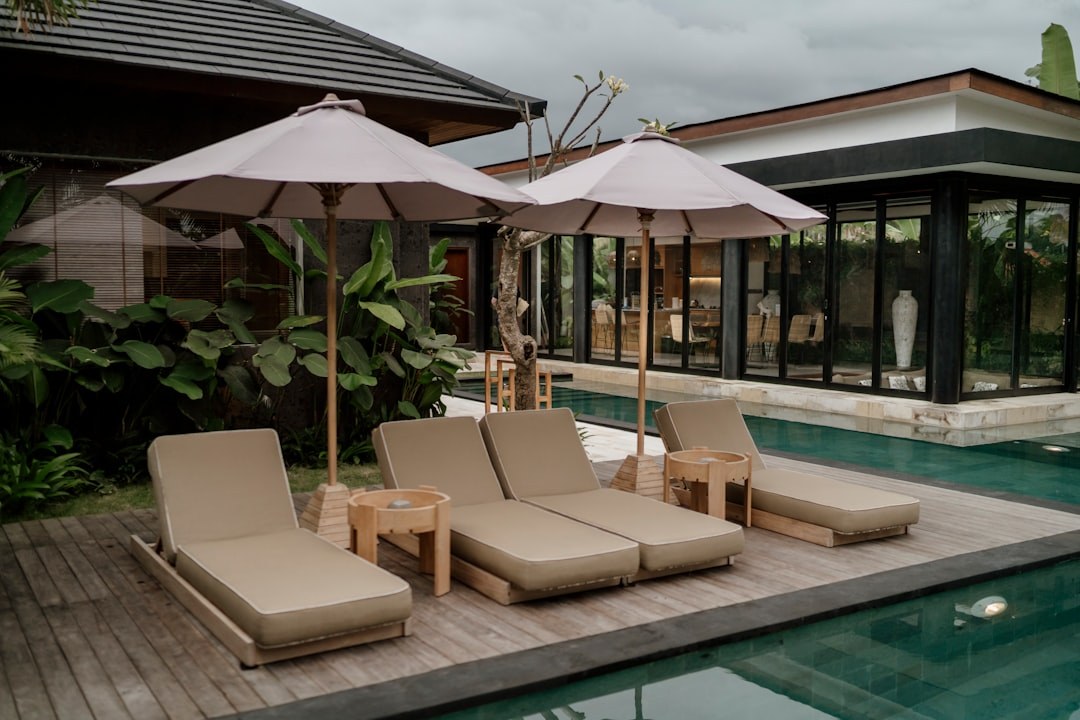
How UV Radiation Damages Outdoor Furniture Materials
UV radiation between 290-400 nanometers breaks polymer chains in outdoor furniture materials, causing color fading, surface chalking, embrittlement, and tensile strength loss. A commercial outdoor sofa in Dubai (UV index 11+ for 6 months/year) experiences 3-4x faster UV degradation than the same sofa in London (UV index 3-5). Materials without UV stabilizers show visible fading within 200-500 UV hours (3-6 months of sun exposure), while properly stabilized materials withstand 1500-3000+ UV hours (3-5 years of commercial use). Understanding the specific degradation mechanism for each material lets you specify the right combination for your climate zone and project lifespan.
The damage mechanism differs by material family. Thermoplastics (PE rattan, textilene, polyester fabric) undergo photodegradation: UV photons excite electrons in polymer chains, causing chain scission (breaking) and cross-linking (rigidification). The visible result is color fading (chromophore breakdown), surface chalking (oxidized polymer powder), and eventual cracking under mechanical stress. Metals (aluminum, steel) don't photodegrade directly, but their organic coatings (powder coat, paint) undergo the same polymer breakdown. Wood (teak) experiences photo-oxidation of lignin and extractives, causing surface graying. Each mechanism has a specific countermeasure: UV absorbers (UVA) and hindered amine light stabilizers (HALS) for plastics, UV-stabilized polyester or PVDF topcoats for metal coatings, and natural oil content for teak.
For a broader overview of all material types we use in commercial outdoor furniture, see our materials page. For a head-to-head comparison of the two most common frame materials, our PE rattan vs aluminum comparison guide covers durability, cost, and best use cases.
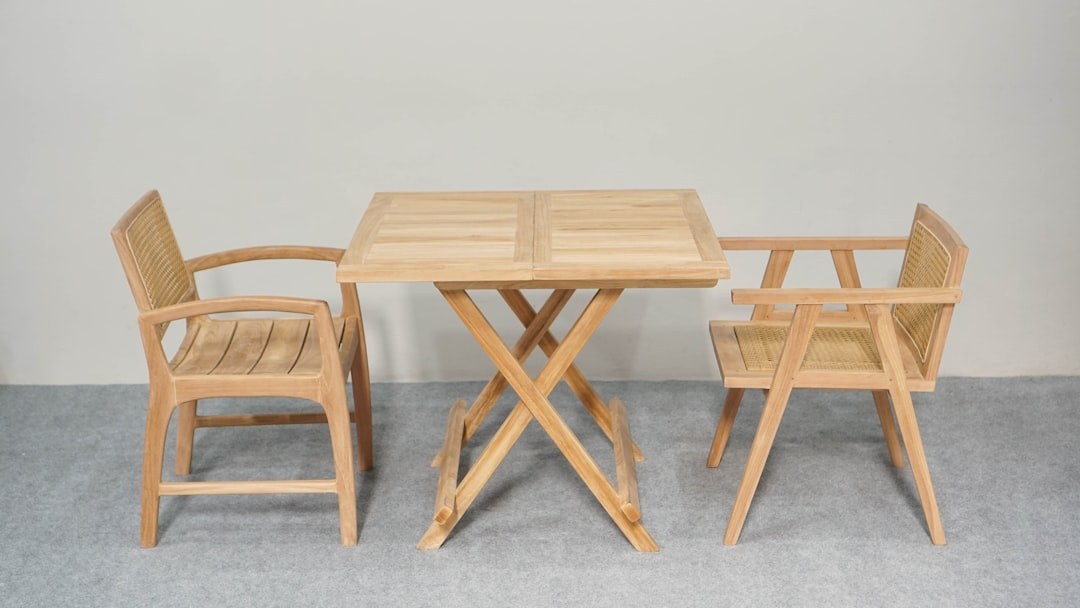
UV Resistance Rating Comparison by Material Type
The 6 primary outdoor furniture materials rank by UV resistance as follows: powder-coated aluminum with UV-stabilized topcoat (3000+ UV hours, 5-7 year color retention), solution-dyed acrylic fabric like Sunbrella (1500-2500 UV hours, 5-year fade warranty), virgin HDPE PE rattan with HALS + UVA (2000-3000 UV hours, 3-5 year no-fade), Grade A teak (naturally UV-resistant, 10+ year lifespan with oil maintenance), polyester textilene mesh with PVC coating (500-1000 UV hours, 2-3 years), and solution-dyed polyester fabric (800-1200 UV hours, 2-3 years). Standard polyester fabric without solution dyeing degrades within 200-500 UV hours and is unsuitable for commercial outdoor use. The UV hours listed are based on accelerated weathering tests (ASTM G154 or G155) and correlate roughly to years of outdoor exposure: divide UV hours by 500-700 for an approximate year estimate in temperate climates, or by 300-400 for tropical/desert climates.
UV Resistance Comparison Matrix
| Material | UV Hours (ASTM G154) | Real-World Lifespan | Degradation Mode | UV Stabilizer Used |
|---|---|---|---|---|
| Powder-coated aluminum (UV-stabilized polyester topcoat) | 3000+ hours | 5-7 years (temperate), 3-5 years (tropical) | Chalking, gloss loss, eventual coating breakdown | UVA + HALS in topcoat |
| PVDF (fluoropolymer) powder-coated aluminum | 5000+ hours | 10+ years (all climates) | Minimal chalking, slight gloss reduction | Fluoropolymer resin (inherent UV resistance) |
| Virgin HDPE PE rattan (UV-stabilized) | 2000-3000 hours | 3-5 years (commercial) | Color fading, embrittlement, strand cracking | HALS (2-3%) + UVA (1-2%) masterbatch |
| Solution-dyed acrylic fabric (Sunbrella grade) | 1500-2500 hours | 5 years (5-year fade warranty typical) | Slow color shift, eventual fiber weakening | Solution-dyeing (pigment in polymer melt) |
| Solution-dyed polyester fabric (SpunPoly) | 800-1200 hours | 2-3 years | Color fading, fiber embrittlement | Solution-dyeing + topical UV coating |
| Textilene mesh (PVC-coated polyester) | 500-1000 hours | 2-3 years | PVC plasticizer migration, discoloration, stiffening | UV stabilizers in PVC coating |
| Standard polyester fabric (non-solution-dyed) | 200-500 hours | 6-12 months | Rapid color fade, fiber breakdown | None (or minimal topical spray) |
| Grade A teak (natural) | N/A (natural resistance) | 10+ years (with oil maintenance) | Lignin photo-oxidation, surface graying | Natural oils (tectoquinone) |
| Polyester rope (UV-stabilized) | 1500-2000 hours | 3-4 years | Color fading, fiber abrasion | HALS in fiber extrusion |
| PP (polypropylene) plastic rattan | 200-400 hours | 6-12 months | Rapid embrittlement, cracking, color loss | None (PP is inherently UV-unstable) |
How to read this table: UV hours represent accelerated weathering test duration before the material shows a Delta E (color change) of 3.0 or greater, measured per CIE Lab color space. Real-world lifespan assumes 8-10 hours of daily sun exposure at UV index 6-8 (temperate climate). In tropical or desert climates (UV index 10+), divide the real-world lifespan by 0.6-0.7. For example, PE rattan rated at 2000 UV hours lasts approximately 4-5 years in southern Spain but only 2.5-3 years in Dubai or Singapore.
The most critical takeaway for B2B buyers: PP (polypropylene) rattan, which some suppliers use as a cheaper alternative to HDPE, has UV resistance of only 200-400 hours. It looks identical to HDPE rattan at the time of purchase but becomes brittle and cracks within 6-12 months. Always specify "virgin HDPE" in your RFQ, not just "PE rattan." For more on our PE rattan manufacturing and material selection, see our PE rattan manufacturing process guide.
Powder Coating UV Resistance: What Makes Aluminum Frames Last
Powder-coated aluminum is the most UV-resistant frame material for commercial outdoor furniture, with a properly formulated coating system lasting 5-7 years in temperate climates and 3-5 years in tropical climates. The coating system we use at SOLAIREVA consists of 3 layers: a chrome-free zirconium pre-treatment (conversion coating, 0.5-1.0 microns), an epoxy primer coat (20-30 microns for corrosion resistance), and a UV-stabilized polyester topcoat (40-60 microns containing UVA + HALS at 1-2% concentration). Total dry film thickness is 60-80 microns, tested per ASTM D7091 (coating thickness measurement).
The UV stabilizer system in the topcoat works through two complementary mechanisms. UV absorbers (benzotriazole or benzophenone type) absorb UV photons and dissipate the energy as harmless heat before the photons can break polymer chains. HALS (hindered amine light stabilizers) act as radical scavengers: when UV does break a polymer chain and create a free radical, HALS neutralizes the radical before it can propagate further damage. The combination of UVA + HALS provides 3-4x better UV resistance than either additive alone. Without UV stabilizers, standard polyester powder coating begins chalking within 18-24 months of continuous sun exposure.
Powder Coat UV Performance by Type
| Coating Type | UV Hours | Chalking Onset | Color Retention (5yr) | Cost Premium |
|---|---|---|---|---|
| Standard polyester (no UV stabilizers) | 800-1000 hours | 18-24 months | Poor (Delta E > 5.0) | Baseline |
| UV-stabilized polyester (UVA + HALS) | 3000+ hours | 4-5 years | Good (Delta E < 3.0) | +10-15% |
| Polyester + super-durable formulation | 4000+ hours | 5-6 years | Excellent (Delta E < 2.0) | +25-30% |
| PVDF (fluoropolymer, 70% PVDF) | 5000+ hours | 8-10+ years | Excellent (Delta E < 1.5) | +60-80% |
Color and UV resistance: Dark colors (black, dark brown, charcoal) absorb more solar radiation and reach higher surface temperatures, accelerating coating degradation. In our testing, black powder-coated frames in direct sun at 40°C ambient reach surface temperatures of 65-75°C, while white frames reach only 45-50°C. This 20-25°C difference reduces UV coating life by approximately 30%. For projects in high-UV climates, we recommend lighter frame colors (white, sand, light grey) when possible, or upgrading to super-durable or PVDF formulations for dark colors.
PVDF for extreme environments: For projects in the Middle East, Australia, or other regions with sustained UV index 10+, PVDF (polyvinylidene fluoride) powder coating is the gold standard. PVDF's carbon-fluorine bonds are among the strongest in organic chemistry (bond energy 485 kJ/mol vs 348 kJ/mol for carbon-carbon), making them essentially immune to UV photodegradation. PVDF coating lasts 10+ years with minimal chalking or color shift. The cost premium is 60-80% over standard polyester, but the extended lifespan eliminates 1-2 recoating cycles, making it lower total cost over a 10-year period. For warranty details on powder coat lifespan, see our commercial furniture warranty coverage guide.
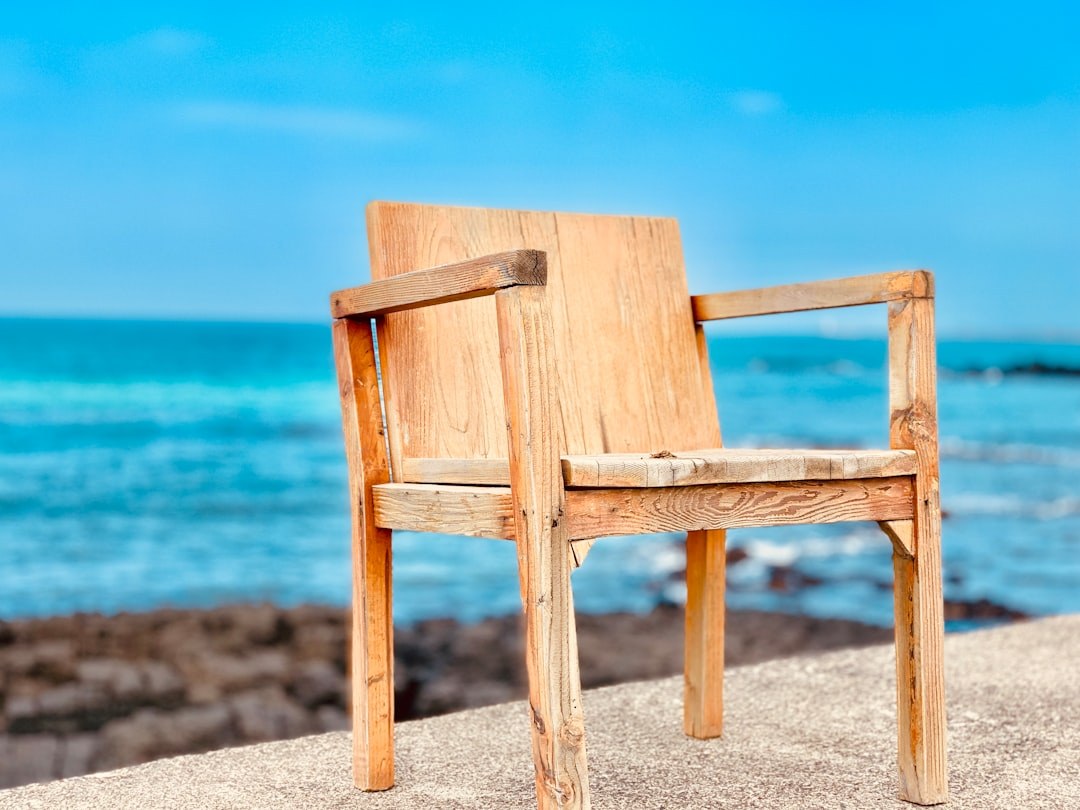
PE Rattan UV Stabilization: Virgin HDPE vs Recycled
PE rattan UV resistance depends entirely on the base polymer grade and UV stabilizer concentration. Virgin HDPE (high-density polyethylene) rattan with 2-3% HALS and 1-2% UVA masterbatch withstands 2000-3000 UV hours and lasts 3-5 years in commercial outdoor use. Recycled HDPE rattan, which some factories use to reduce cost by 25-40%, has inconsistent UV resistance because the recycling process degrades polymer chain length and the additive concentration is unreliable. PP (polypropylene) rattan, the cheapest option, has only 200-400 UV hours and becomes brittle within 6-12 months. The price difference between virgin HDPE and PP rattan is $0.15-$0.30 per meter of rattan strip, but the lifespan difference is 5-10x.
How UV stabilizers work in PE rattan: During extrusion, the HDPE pellets are mixed with a UV masterbatch containing HALS (typically Tinuvin 770 or Chimassorb 944) and a UV absorber (typically Tinuvin 328 or Chimassorb 81). The HALS concentration of 2-3% by weight provides the sweet spot: below 1.5%, UV protection is insufficient for commercial use; above 4%, additional protection is marginal and cost increases disproportionately. The masterbatch is dispersed during extrusion at 180-200°C, ensuring uniform distribution throughout the rattan strip. After extrusion, the rattan is water-cooled, stretched to final width (typically 5-8mm), and wound onto spools for weaving.
PE Rattan Grade Comparison
| Rattan Grade | Polymer | UV Hours | Commercial Lifespan | Cost vs Virgin HDPE | Defect Risk |
|---|---|---|---|---|---|
| Premium virgin HDPE + HALS 3% | Virgin HDPE | 2500-3000 | 4-5 years | +15-20% | Very low |
| Standard virgin HDPE + HALS 2% | Virgin HDPE | 2000-2500 | 3-5 years | Baseline (100%) | Low |
| Recycled HDPE + HALS 2% | Recycled HDPE | 800-1500 | 1.5-3 years | 60-75% | Medium-High |
| Recycled HDPE (no UV stabilizers) | Recycled HDPE | 200-500 | 6-12 months | 50-60% | High |
| PP (polypropylene) | PP | 200-400 | 6-12 months | 55-70% | Very High (cracking) |
Color and UV in PE rattan: Darker rattan colors (dark brown, black, espresso) absorb more UV energy and heat, accelerating degradation. In accelerated testing, dark brown virgin HDPE rattan showed a Delta E of 3.2 after 2000 UV hours, while light grey rattan showed only Delta E 1.8 at the same exposure. For high-UV projects, we recommend medium-tone colors (natural brown, grey, mixed brown) rather than dark solid colors. Multi-color mixed weaves (brown + black + natural) also hide fading better than solid colors because the initial color variation masks gradual shift.
For a detailed walkthrough of our PE rattan extrusion, weaving, and UV stabilization process, see our PE rattan manufacturing process guide which covers raw material selection through final quality testing.
Fabric UV Resistance: Solution-Dyed Acrylic vs Polyester
Solution-dyed acrylic fabric (Sunbrella, Outdura, and equivalent brands) provides 1500-2500 UV hours of fade resistance and carries a 5-year fade warranty from most manufacturers, making it the standard for commercial outdoor furniture cushions. The solution-dyeing process adds pigment directly into the acrylic polymer melt before fiber extrusion, so color exists throughout the entire fiber cross-section rather than only on the surface. This means UV degradation removes faded outer fibers while new, fully-colored fibers are exposed underneath - the fabric maintains color even as individual fibers degrade. Cost is $8-18 per linear yard (54" width) for premium solution-dyed acrylic vs $3-6 for standard polyester.
Solution-dyed polyester (SpunPoly) uses the same solution-dyeing process but with polyester fiber instead of acrylic. It offers 800-1200 UV hours (2-3 year commercial lifespan) at a cost of $5-9 per yard. SpunPoly is a viable budget alternative to acrylic for projects with 2-3 year replacement cycles. However, polyester fiber has inherently lower UV resistance than acrylic (the ester bond in polyester is more susceptible to UV scission than the methyl group in acrylic), so even solution-dyed polyester degrades faster than solution-dyed acrylic.
Fabric UV Performance Comparison
| Fabric Type | Dye Method | UV Hours | Fade Warranty | Cost/Yard (54") | Best For |
|---|---|---|---|---|---|
| Solution-dyed acrylic (Sunbrella) | Solution-dyed | 1500-2500 | 5 years | $8-18 | Hotels, resorts, 5+ year projects |
| Solution-dyed acrylic (Olefin/HDPE) | Solution-dyed | 1200-1800 | 3-5 years | $6-12 | Mid-range commercial, budget-conscious |
| Solution-dyed polyester (SpunPoly) | Solution-dyed | 800-1200 | 2-3 years | $5-9 | 2-3 year replacement cycle projects |
| Piece-dyed polyester | Surface dye | 200-500 | None | $3-6 | Indoor or covered outdoor only |
| Cotton blend | Piece-dyed | 100-300 | None | $4-7 | Not recommended for outdoor commercial use |
The piece-dyeing trap: Piece-dyed fabric (dye applied to the finished woven fabric rather than the fiber melt) has color only on the fiber surface. UV degradation removes the surface dye layer, and the white core of the fiber is exposed - causing rapid, visible fading. Some suppliers use piece-dyed polyester and claim "UV treated" because a topical UV spray coating is applied. This spray coating lasts 200-500 UV hours (3-6 months) before washing off with rain and cleaning. Always specify "solution-dyed" in your RFQ - this is a fiber-level dyeing process, not a surface treatment.
For cushion construction specifications including foam density and quick-dry technology, and how fabric choice integrates with the full cushion system, see our commercial outdoor sofa sets guide which covers cushion systems in detail.
Teak: Natural UV Resistance and the Graying Question
Grade A teak (Tectona grandis, heartwood from trees 40+ years old) is naturally UV-resistant due to its high oil and silica content: teak oil (containing tectoquinone) acts as a natural UV absorber, and silica particles in the wood structure scatter UV radiation. Grade A teak lasts 10+ years outdoors without any UV stabilizer treatment - the only material in this comparison that requires no artificial UV protection. However, teak does undergo photo-oxidation of surface lignin, causing a color shift from golden brown to silver-grey within 6-12 months of sun exposure. This graying is cosmetic, not structural - the wood retains full structural integrity. Many designers consider the silver-grey patina desirable; others prefer to maintain the original golden color with annual oiling.
Grade differences and UV: Only Grade A teak (pure heartwood, no sapwood, no knots) offers full natural UV resistance. Grade B teak (some sapwood, minor knots) has lower oil content and begins checking and splitting within 2-3 years. Grade C teak (significant sapwood, knots, color variation) lacks sufficient oil for UV protection and degrades like any untreated hardwood within 1-2 years. The price difference is significant: Grade A teak costs $8-15 per board foot, Grade B costs $5-8, and Grade C costs $3-5. For commercial projects, only Grade A is recommended - the cost difference is recovered within 3-4 years through eliminated maintenance and replacement costs.
Maintenance options: To preserve golden color, apply teak sealer (not oil - oil attracts dirt and promotes mildew) every 6-12 months. To accelerate the silver-grey patina, no treatment is needed - nature takes its course. To restore greyed teak to original color, use a 2-part teak cleaner (sodium hydroxide + phosphoric acid) followed by sealer. Avoid pressure washing above 1200 PSI - it erodes the soft summer growth rings and creates a rough surface. For teak maintenance scheduling in commercial settings, our maintenance checklist includes teak-specific care intervals.
UV Testing Standards: What the Numbers Actually Mean
UV resistance testing for outdoor furniture materials uses two primary methods: QUV accelerated weathering (ASTM G154, fluorescent UV lamps emitting 295-365nm) and Xenon arc weathering (ASTM G155 or ISO 4892-2, xenon lamp simulating full solar spectrum 295-800nm). QUV testing is faster and cheaper ($300-600 per test cycle) but over-emphasizes UV-B radiation compared to real sunlight. Xenon arc testing is more realistic ($800-1500 per cycle) but takes longer. For commercial furniture specification, Xenon arc testing per ASTM G155 Cycle 1 (0.35 W/m² at 340nm, 102 minutes UV + 18 minutes water spray) is the industry standard because it most accurately reproduces real-world solar damage including UV, visible light, and infrared heat.
Test duration standards: Residential outdoor furniture is typically tested to 1000 UV hours. Commercial outdoor furniture should be tested to 2000 hours minimum. Premium UV-resistant materials are tested to 3000+ hours. A material that passes 2000 hours with Delta E < 3.0 (per CIE Lab color space measurement) and no visible chalking or cracking will typically last 3-5 years in temperate commercial outdoor use. In tropical climates, apply a 0.6-0.7 multiplier: a 2000-hour material lasts approximately 2-3.5 years in Dubai or Singapore.
UV Test Methods and Pass/Fail Criteria
| Parameter | Test Standard | Pass Criteria (Commercial) | Measurement Method |
|---|---|---|---|
| Color change | ASTM G155 / ISO 4892-2 | Delta E < 3.0 at 2000 hrs | CIE Lab color space (spectrophotometer) |
| Gloss retention | ASTM D523 | > 50% of original at 2000 hrs | Gloss meter at 60° angle |
| Chalking | ASTM D4214 | Rating 8-10 (10 = none) at 2000 hrs | Tape pull-off comparison |
| Cracking/checking | ASTM G155 visual | No cracking at 2000 hrs | Visual inspection at 10x magnification |
| Tensile strength retention | ASTM D638 (plastics) | > 70% of original at 1500 hrs | Tensile test before/after UV exposure |
| Coating adhesion | ASTM D3359 (cross-hatch) | Rating 4B or 5B at 2000 hrs | Cross-hatch tape test |
Requesting test reports: When evaluating suppliers, request UV test reports from an accredited laboratory (ISO 17025 certified, such as SGS, Intertek, or TUV). The report should specify: test method (QUV or Xenon arc), test standard (ASTM G154/G155 or ISO 4892), exposure duration, irradiance level, cycle parameters, and results for each evaluation criterion. A supplier claiming "UV resistant" or "UV tested" without providing a specific test report with these details is not providing verifiable UV resistance. For more on factory verification and quality documentation, see our factory verification guide.
How to Specify UV Resistance in Your RFQ
Specifying UV resistance in your furniture RFQ requires 5 specific parameters: material grade (virgin vs recycled, Grade A vs B), UV stabilizer type and concentration (HALS at 2-3% for PE rattan, UVA + HALS for powder coat), minimum UV test hours (2000 for standard commercial, 3000+ for premium), test standard (ASTM G155 Xenon arc preferred), and color requirements (with Delta E tolerance specified). Providing these 5 parameters eliminates ambiguity and forces suppliers to match a verifiable specification rather than offering "UV resistant" as a marketing claim. RFQs without specific UV parameters receive the cheapest available material, which may fail within 12-18 months in commercial use.
UV Specification Template for RFQ
- Material grade: "Aluminum frame: 6063-T5 alloy, powder-coated with UV-stabilized polyester topcoat (UVA + HALS, 1-2% concentration), total DFT 60-80 microns." For rattan: "Virgin HDPE PE rattan, HALS 2-3%, UVA 1-2%, minimum 2000 UV hours per ASTM G155."
- UV test requirement: "All UV-exposed materials must pass minimum 2000 hours Xenon arc weathering per ASTM G155 Cycle 1. Test report from ISO 17025 accredited laboratory required with shipment."
- Color change tolerance: "Delta E < 3.0 at 2000 hours per CIE Lab measurement. Supplier to provide test data for specified color(s)."
- Climate specification: "Furniture will be installed in [location] with UV index [X-X] for [X] months/year. UV resistance must be adequate for [X]-year commercial lifespan."
- Fabric specification: "Cushion fabric: solution-dyed acrylic (Sunbrella or equivalent), minimum 1500 UV hours per AATCC 16.3, 5-year fade warranty from fabric manufacturer required."
Red flags in supplier responses: If a supplier responds to your UV specification with "our materials are UV resistant" without providing test data or acknowledging the specific UV hours and test standard you specified, this indicates they do not perform UV testing and are using generic materials. A qualified factory will either provide existing test reports or offer to run a UV test ($300-1500, 4-8 weeks) before production. For the complete RFQ preparation process, see our OEM process guide which covers technical specification documentation.
Climate-Specific UV Resistance Recommendations
UV resistance requirements vary dramatically by project location. A hotel in Munich (UV index 3-5, 6 months of significant sun) needs far less UV protection than a resort in Dubai (UV index 10-11+, 12 months of intense sun). The cost difference between adequate and over-specified UV resistance can be 15-30% of material cost, so matching UV specification to climate is both a performance and budget decision. Below are our recommendations by climate zone, based on 20+ years of manufacturing outdoor furniture for projects in 40+ countries.
UV Resistance Recommendations by Climate Zone
| Climate Zone | UV Index Range | Frame Coating | Rattan Grade | Fabric | Expected Lifespan |
|---|---|---|---|---|---|
| Temperate (Northern Europe, Pacific NW US) | 3-5 (4-6 months/yr) | UV-stabilized polyester (3000 hrs) | Standard virgin HDPE (2000 hrs) | Solution-dyed acrylic or SpunPoly | 5-7 years |
| Mediterranean (Southern Europe, California) | 5-8 (8-10 months/yr) | UV-stabilized polyester (3000 hrs) | Premium virgin HDPE (2500+ hrs) | Solution-dyed acrylic (Sunbrella) | 4-5 years |
| Subtropical (Southeast US, South China) | 7-9 (10-12 months/yr) | Super-durable polyester (4000 hrs) | Premium virgin HDPE (2500+ hrs) | Solution-dyed acrylic (Sunbrella) | 3-5 years |
| Tropical/Desert (Middle East, SE Asia, Australia) | 10-11+ (12 months/yr) | PVDF or super-durable (5000+ hrs) | Premium virgin HDPE (3000 hrs) | Solution-dyed acrylic (Sunbrella, 2500 hrs) | 3-4 years |
| High Altitude (Andes, Himalayan foothills) | 11-13+ (varies) | PVDF (5000+ hrs) | Not recommended (use aluminum + fabric) | Solution-dyed acrylic (Sunbrella) | 3-5 years |
For tropical and desert climates, we also recommend specifying lighter colors for frames and fabrics. A black powder-coated aluminum frame in Dubai reaches 70-75°C surface temperature in direct sun, which not only accelerates UV degradation but also makes the furniture too hot to touch for 4-6 hours per day. Light-colored frames (white, sand, light grey) stay 20-25°C cooler and extend both coating life and user comfort. For coastal projects where salt spray is also a factor, see our Maldives resort case study which details the combined UV + salt spray material package we delivered for a 5-star resort.
Frequently asked questions about UV resistant furniture materials
What are the most UV resistant outdoor furniture materials?
The most UV resistant outdoor furniture materials are powder-coated aluminum (3000+ UV hours, 5-7 year color retention), solution-dyed acrylic fabric like Sunbrella (1500-2500 UV hours, 5-year fade warranty), virgin HDPE PE rattan with UV stabilizers (2000-3000 UV hours, 3-5 year no-fade), and Grade A teak (naturally UV-resistant due to high oil content, 10+ year lifespan). Polyester textilene mesh offers 500-1000 UV hours (2-3 years), and standard polyester fabric degrades within 200-500 UV hours (1 season). For commercial projects in high-UV climates (Middle East, Southeast Asia), powder-coated aluminum frames paired with solution-dyed acrylic cushions provide the best UV resistance combination.
How many UV hours should outdoor furniture fabric withstand for commercial use?
Commercial outdoor furniture fabric should withstand a minimum of 1500 UV hours (tested per AATCC 16.3 or ISO 105-B02) for standard hospitality use, and 2000+ UV hours for high-UV climates like the Middle East, Australia, or Southeast Asia. Solution-dyed acrylic fabrics (Sunbrella, Outdura) typically rate 1500-2500 UV hours. Solution-dyed polyester (SpunPoly) rates 800-1200 UV hours. Standard polyester fabric rates only 200-500 UV hours and is unsuitable for commercial outdoor use. UV hours correlate roughly to years of outdoor exposure: 1500 UV hours ≈ 3-5 years of real-world fading resistance depending on climate intensity and daily sun exposure.
How long does powder coating last in outdoor furniture?
Powder coating on outdoor furniture aluminum frames lasts 5-7 years in temperate climates and 3-5 years in tropical or desert climates with high UV index. The powder coat system we use at SOLAIREVA consists of a chromate or zirconium pre-treatment, an epoxy primer coat (20-30 microns), and a polyester top coat (40-60 microns) with UV absorbers (UVA) and hindered amine light stabilizers (HALS). Total dry film thickness is 60-80 microns. Without UV stabilizers in the top coat, polyester powder coating begins chalking and fading within 18-24 months of continuous sun exposure. Fluoropolymer (PVDF) powder coating extends UV life to 10+ years but costs 60-80% more than standard polyester.
How do you test UV resistance of outdoor furniture materials?
UV resistance of outdoor furniture materials is tested using QUV accelerated weathering (ASTM G154, fluorescent UV lamps) or Xenon arc weathering (ASTM G155, ISO 4892-2, simulates full solar spectrum). Standard test durations: 1000 hours for residential furniture, 2000 hours for commercial furniture, 3000+ hours for premium UV-resistant grades. After exposure, materials are evaluated for color change (Delta E, using CIE Lab color space; pass threshold is Delta E < 3.0), gloss retention (pass threshold > 50% of original), chalking (ASTM D4214, pass = rating 8-10), and mechanical integrity (no cracking or embrittlement). A material that passes 2000 hours with Delta E < 3.0 will typically last 3-5 years in commercial outdoor use.
Does PE rattan fade in the sun?
PE rattan made from virgin HDPE with UV stabilizers (HALS + UV absorbers at 2-3% concentration) resists fading for 3-5 years in commercial outdoor environments, passing 2000-3000 UV hours in accelerated weathering tests. However, PE rattan made from recycled HDPE or without UV stabilizers begins fading and becoming brittle within 6-12 months. The key indicator of UV resistance in PE rattan is material grade: virgin HDPE with UV masterbatch costs 25-40% more than recycled or non-UV-stabilized rattan but lasts 3-5x longer. Color also affects UV resistance: darker rattan colors (brown, black) absorb more heat and degrade faster than lighter colors (grey, natural).
Specify UV resistance that matches your project lifespan
UV resistance is not a single property - it is a system of material grade, UV stabilizer chemistry, coating formulation, and color selection working together. A hotel project in Berlin needs different UV specifications than a resort in Dubai, and over-specifying UV resistance wastes 15-30% of material cost just as under-specifying it causes premature failure within 12-24 months. The key decisions are: virgin vs recycled polymer for rattan, standard vs super-durable vs PVDF powder coat for frames, solution-dyed acrylic vs polyester for fabric, and Grade A vs Grade B for teak. Each decision should be driven by your project's UV index, expected lifespan, and budget.
At SOLAIREVA, we manufacture with virgin HDPE rattan (HALS 2-3%), UV-stabilized polyester powder coat (UVA + HALS, DFT 60-80 microns), solution-dyed acrylic fabric (Sunbrella-grade, 1500+ UV hours), and Grade A teak - all as standard. For extreme UV environments, we offer PVDF coating upgrades, premium rattan grades (3000+ UV hours), and super-durable powder formulations. Every material we use comes with UV test data from accredited laboratories. Request a custom quote with your project location and expected lifespan, and we will specify the UV resistance package that matches your climate and budget - or contact our OEM team for material consultation on specific product lines.